-
LatestThe best Speaker of 2026
-
 Ultimate Ears Megaboom 4 Rugged speaker with 360° sound and deep bass.
-
 Ultimate Ears Boom 4 Portable speaker: 360° sound, durable, perfect for adventures.
-
 Ultimate Ears Wonderboom 4 Portable speaker with style, durability, and great sound.
-
 Turtlebox Ranger Rugged outdoor speaker with powerful, clear sound.
-
 House of Marley Get Together 3 Eco-friendly speaker with rich sound and stylish design.
-
 Turtlebox Original Gen 3 Rugged, portable speaker with powerful sound and durability.
-
-
LatestThe best Speaker of 2026
-
 Onkyo GX-10DB Compact speakers with premium sound and versatile connectivity.
-
 Onkyo GX-30ARC Compact speakers delivering impressive sound and sleek design.
-
 Audioengine HD6 HiFi speakers for rich sound and seamless connectivity.
-
 Mackie CR8BT Premium sound quality with Bluetooth convenience.
-
 Mackie CR5BT Affordable studio monitors with Bluetooth connectivity, great sound.
-
 KEF LSX II LT Compact powered speakers with streaming and HDMI ARC
-
-
LatestThe best Speaker of 2026
-
 Yamaha NS-F 51 Smooth, affordable floorstanders for music and movie nights
-
 Q Acoustics 5040 Floorstanders deliver clear vocals, controlled bass, spacious sound.
-
 Q Acoustics 3050i Hifi Warm, room-filling floorstanders for music and movie nights.
-
 Q Acoustics M40 Room-filling stereo sound with simple all-in-one connectivity.
-
 Polk Audio T50 Warm, affordable towers for music and home theater
-
 KEF Q550 Slim towers, clear vocals, spacious imaging, controlled bass.
-
-
LatestThe best Speaker of 2026
-
 Logitech Z207 2.0 Affordable PC speakers with versatile connectivity options.
-
 Edifier G2000 Compact speakers with powerful sound, perfect for desks.
-
 Edifier R1855DB Fuller desktop sound with flexible wired and wireless connectivity.
-
 Edifier R1280T Affordable powered speakers offer warm, clear everyday sound.
-
 Audioengine A2+ Compact powered speakers deliver clear, flexible desktop sound.
-
 Logitech Z313 Compact 2.1 desktop speakers deliver fuller everyday audio.
-
-
LatestThe best Headphone of 2026
-
 Sony 1000X THE COLLEXION Zwart Sleek headphones with immersive sound and adaptive noise cancellation.
-
 Bose QuietComfort Ultra Headphones (Gen 2) Immersive sound, top-notch noise cancellation, ultimate comfort.
-
 Sony WH-1000XM6 High-performance headphones with exceptional sound and features.
-
 JBL Tour One M3 Smart TX Premium noise-cancelling headphones with a travel-ready audio transmitter
-
 Cleer Audio Enduro ANC Affordable headphones with cancellation and marathon battery life
-
 Cleer Audio Alpha Detailed sound, strong noise cancellation, and all-day battery life.
-
-
LatestThe best Headphone of 2026
-
 Jabra Evolve 20SE UC Stereo Lightweight wired headset for clear everyday office calls
-
 Jabra Evolve 40 UC Wired headset delivers clear calls and convenient controls
-
 Philips TAH4205 Compact wireless headphones with punchy bass and quick charging
-
 Jabra Evolve2 65 Flex MS Foldable Teams headset for clear, portable hybrid-work calls.
-
 JBL JR310BT Kid-friendly wireless audio with an 85 dB limit
-
 Sony WH-CH520 Lightweight headphones, long battery life, effortless pairing.
-
-
LatestThe best Headphone of 2026
-
 Cleer Audio ARC 3 Open-ear comfort, rich features, everyday awareness.
-
 Samsung Buds FE Affordable everyday earbuds with ANC and a secure fit
-
 Sennheiser Momentum Sport Workout earbuds with heart-rate tracking and punchy sound
-
 Sony LinkBuds Fit Comfortable, secure earbuds for commutes and workouts.
-
 JBL Live Buds 3 Feature-rich earbuds with touchscreen case and customizable sound.
-
 Bowers & Wilkins Pi8 Premium earbuds offer detailed sound and travel-ready versatility
-
-
LatestThe best Headphone of 2026
-
 HyperX Cloud Alpha Wireless Wireless headphones: immersive sound, long-lasting battery life.
-
 Razer Kraken V4 Immersive gaming headset with comfort and sound quality.
-
 Turtle Beach Stealth 700 GEN3 Flexible gaming audio, Bluetooth, and exceptional battery endurance.
-
 Logitech G535 Lightspeed Wireless Lightweight comfort and reliable PC, PlayStation gaming audio
-
 Corsair Void RGB Elite Wireless Comfortable PC gaming headset with punchy audio
-
 Corsair HS80 RGB Wireless Comfortable gaming headset with clear audio and microphone
-
-
LatestThe best Home audio system of 2026
-
 Sony Bravia Theatre Bar 8 Premium Dolby Atmos sound with a tidy, expandable single-bar design.
-
 TCL S45H 2.0 Compact budget soundbar boosts dialogue with virtual surround.
-
 TCL S55H 2.1 Compact soundbar delivers clearer dialogue, cinematic sound, and wireless bass.
-
 TCL Q85H Immersive Dolby Atmos cinema sound, without receiver hassle.
-
 Harman Kardon Enchant 1100 Premium soundbar brings immersive cinema and clear dialogue
-
 Harman Kardon Enchant 900 Compact Atmos soundbar with clear dialogue and spacious sound.
-
-
LatestThe best Home audio system of 2026
-
 Google TV Streamer 4K Polished streaming and smart-home hub for everyday viewing
-
 Apple TV 4K (Wi-Fi) Premium streaming with polished menus and seamless integration.
-
 Nvidia Shield TV Pro Versatile 4K streamer for local media and gaming
-
-
LatestThe best Home audio system of 2026
-
 Pioneer VSX-LX305 Immersive nine-channel home theater with Dirac Live correction.
-
 Denon AVC-X3800H Expandable home theater power with Atmos and gaming connectivity.
-
 Pioneer VSX-LX505 Flexible Atmos receiver with Dirac Live, gaming support
-
 JBL MA510 Straightforward 5.2-channel home theater with modern gaming connectivity.
-
 JBL MA310 Straightforward 5.2-channel surround sound for 4K home theaters
-
 Denon AVR-S970H Flexible 7.2-channel receiver for immersive, modern home theaters
-
-
LatestThe best Home audio system of 2026
-
 Denon PMA-1700NE Versatile stereo amp for vinyl and digital music
-
 Pioneer A-40AE Balanced stereo sound, versatile analog and digital connections.
-
 Audiolab 6000A Versatile stereo amplification with clear sound and connectivity
-
 Denon PMA-900HNE Streaming stereo amplifier for vinyl, TV, and playlists
-
 LEAK Stereo 130 Versatile, stylish amplifier for vinyl, digital audio, and Bluetooth.
-
 Yamaha A-S701 Powerful, versatile stereo amplification for traditional home hi-fi.
-
-
LatestThe best Home audio system of 2026
-
 Mackie CR8S Enhance audio with deep, rich bass performance.
-
 Audioengine S8 Compact powered subwoofer adds balanced bass to small stereo setups.
-
 KEF Kube 12 MIE Active Subwoofer Controlled, room-filling bass for music and cinematic impact.
-
 Klipsch R-12SW Powerful, room-filling bass for movies and music.
-
 Klipsch R-121SW Powerful, room-filling bass for movies and music.
-
 Bose Bass Module 500 Compact subwoofer adds fuller sound to compatible soundbars.
-
Apple TV 4K (Wi-Fi) review
Review the Apple TV 4K Wi-Fi: enjoy sharp HDR streaming, smooth Apple integration and a polished interface, while weighing its premium price and lack of Ethernet.
check best price


 2023-02-08
- By Lisanne Zegwaardt
Summary / TL;DR

The Apple TV 4K (Wi-Fi) is a compact streaming box with a polished tvOS interface, broad app support, and 4K playback with Dolby Vision, HDR10+ and Dolby Atmos on compatible equipment. iPhone users can set it up quickly and benefit from features such as AirPlay and shared Apple services. The Siri Remote can also control TV power and volume.
Its main drawbacks are its higher price and the Wi-Fi model’s lack of Ethernet. An HDMI cable and USB-C charging cable for the remote are not included. Apple Arcade offers casual gaming, but the device is not a replacement for a game console. It is best suited to frequent streamers, particularly those already using Apple devices; viewers who only need a few basic apps may find a less expensive streaming stick sufficient.
Where to buy
 Best offers of the Apple TV 4K (Wi-Fi) at Amazon.com
Want to help us grow? When you purchase items through the above links we receive a small commission.
Introduction
The Apple TV 4K (Wi-Fi) is a premium 4K streaming box for people who want their TV’s apps to feel as polished as the rest of their Apple setup. It brings streaming services, films and live TV into one place, and works especially well if you already use an iPhone, AirPods or Apple TV+. That makes it more than a simple upgrade for an older television: it can also make a perfectly good 4K TV feel less dependent on its built-in software.
The appeal is easy to picture on an ordinary weeknight: you finish an episode on your phone during the commute, then pick it up on the living-room TV without hunting through a row of unfamiliar apps. The trade-off is that this streamer costs more than many basic options, so it makes the most sense for viewers who’ll use its smooth Apple integration—not just occasional Netflix watching.
Related reviews


Design and Build Quality
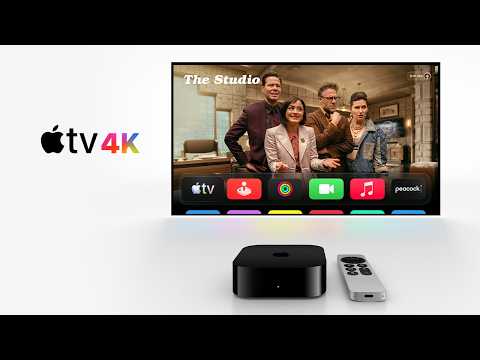
The Apple TV 4K is a small, square black box measuring about 9.3 cm across and 3.1 cm tall. It takes up little room on a media shelf, and its low profile makes it easy to tuck beside a soundbar or behind a TV stand. The matte finish helps it blend into dark cabinets, though the black casing can pick up dust that shows under a bright light.
A compact, quiet design
The simple enclosure has a subtle Apple logo on top and a small white status light on the front. There’s no screen or row of buttons to break up the clean look. Its fanless design also means there’s no cooling noise, even during a long film or streaming session. In a quiet room, that’s a welcome detail: the player won’t add a faint whir to dialogue-heavy scenes.
The Wi-Fi model weighs about 208 grams, so it’s light enough to move easily between rooms, but it feels more like a solid little component than a flimsy dongle. Its modest size does come with one practical catch: if you place it behind a TV, leave enough space for the cables to bend without being pinched. Overall, it’s a tidy, unobtrusive Apple TV streaming box built to sit quietly in a home entertainment setup.
What's in the Box
The box keeps things simple: you get the Apple TV 4K, a Siri Remote, a power cord and paperwork. There’s no HDMI cable, so check your TV setup before delivery; a spare cable from a game console or Blu-ray player will usually do the job, provided it supports the features you want to use.
- Apple TV 4K streaming box
- Siri Remote with a USB-C charging port
- Power cord
- Documentation
Apple doesn’t include a USB-C charging cable for the remote, either. That’s a small annoyance if you don’t already have a suitable cable nearby, though the remote arrives with some charge. The Wi-Fi version also comes without an Ethernet cable—and has no Ethernet port—so wired networking isn’t an option. For a typical living-room setup, the essentials are there, but you may need to add an HDMI cable and a USB-C cable to your shopping list.
Setup and tvOS Experience
Setting up the Apple TV 4K is quick if you already use an iPhone. Hold the phone near the box and Quick Start can transfer your Wi-Fi details and Apple Account settings, saving you from typing a long password with the remote. You’ll still need to follow the on-screen prompts, and the first software update can add a few minutes before you reach the home screen.
Without an iPhone, setup works fine using the remote: choose a language and region, connect to Wi-Fi, then sign in with your Apple Account. That route is a little slower, especially if you need to enter an email address and password one character at a time, but it doesn’t require another Apple device. You can also review options such as location access and analytics during setup rather than accepting every prompt by default.
A simple tvOS interface
tvOS keeps the home screen clean, with installed apps arranged in rows. Moving between Apple TV+, Netflix and other streaming apps feels straightforward; the main adjustment is that each service has its own menus and recommendations, so the layout isn’t perfectly consistent. You can rearrange apps to put your regular choices near the top, which is handy if the TV is shared and everyone tends to open the same few services.
The Apple TV app brings Apple’s shows and films together with a watchlist and viewing progress, while the Control Center provides quick access to settings and user profiles. If you have more than one person using the box, profiles help keep recommendations and viewing lists separate. Some apps may still ask you to sign in individually, so the initial setup doesn’t necessarily mean every streaming account is ready to go.
One small convenience is how easily the device fits into an existing Apple setup: your account and compatible smart-home settings can carry across without much manual work. For a household without Apple gear, the menus remain approachable, but account setup takes a bit more effort. Overall, the Apple TV 4K setup is polished and low-fuss, with the main delays coming from software downloads and signing into separate streaming services.
Picture and Audio Performance
The picture is crisp and clean, with support for 4K resolution at up to 60 frames per second. On a good-quality stream, fine details hold up well: subtitles stay sharp, and small textures—like stitching on a jacket or leaves against a dark sky—look defined rather than smeared. The final result still depends on the source and your TV; a 4K box can’t turn a low-bitrate stream into pristine footage.
It supports Dolby Vision, HDR10+, HDR10 and HLG, so it works with the main HDR formats used by streaming services and recent TVs. HDR can add brighter highlights and more visible detail in shadowy scenes. In a space scene, for example, stars can stand out against a dark background without the whole image looking washed out. For the best result, your TV and the specific film or show need to support the same HDR format.
| Picture or audio format | What it means in practice |
|---|---|
| 4K at up to 60 fps | Sharp playback for supported films and shows; it does not provide 4K at 120 fps. |
| Dolby Vision, HDR10+, HDR10, HLG | Broad HDR support, provided the TV and content match. |
| Dolby Atmos, Dolby Digital 5.1 and 7.1 | Surround formats for compatible sound systems and content. |
Audio support is just as flexible on paper. With a compatible soundbar or receiver, Dolby Atmos can give effects a more spacious, height-aware feel—rain may seem to fall overhead instead of simply coming from the TV. But Atmos depends on the title, streaming app and audio setup; a standard TV-speaker setup won’t reproduce the same effect. The player also has no built-in speaker, so all sound comes through your TV or connected audio gear.
One practical tip: enable the options to match the content’s frame rate and dynamic range. That helps avoid motion judder in film content and prevents SDR shows from being unnecessarily displayed in an HDR mode. The result is a capable 4K HDR streaming player, though its excellent format support matters most when the rest of your setup can take advantage of it.
Streaming and Gaming Features
The Apple TV 4K works with the major streaming apps, including Netflix, Disney+, Prime Video, YouTube and Apple TV+. Its Up Next row can keep track of shows from participating services, so you can pick up an episode without remembering which app it lives in. That handoff isn’t universal, though: some services keep their recommendations and watchlists inside their own app.
Streaming apps and Apple Arcade
Apple Arcade adds a useful extra for households that want casual games on the main TV. Titles such as Sneaky Sasquatch work well for short sessions, and many games support Bluetooth controllers, including compatible PlayStation and Xbox controllers. You’ll need to provide the controller yourself; it isn’t included. Some simpler games can be played with the Siri Remote, but a controller makes platformers and action games far less fiddly.
The A15 Bionic chip gives games a responsive feel, but this is still a streaming media player with casual gaming, not a console replacement. It won’t run PlayStation or Xbox releases, and the 64GB Wi-Fi model’s storage can limit how many larger games you keep installed. For family games, Apple Arcade, or filling a spare half-hour, it’s a handy bonus; serious players will want a dedicated console.
Remote and Connectivity
The Siri Remote is compact, with an aluminium body, a clickpad and a touch-enabled outer ring for swiping through menus. You can also click the ring’s edges to move through a long list one item at a time—a handy option when a swipe jumps past the show you meant to select. The remote connects over Bluetooth, so you don’t have to point it directly at the box.
Its side-mounted Siri button is easy to reach, and the remote can control TV power and volume. In a typical living-room setup, that means you can turn on the television, adjust the sound and browse streaming apps without juggling a separate TV remote. It can also send commands to compatible TVs and receivers using infrared. The rechargeable battery lasts for months in ordinary use, and charging uses USB-C; the cable isn’t included.
| Connection or control | What it means in use |
|---|---|
| Wi-Fi 6 | Wireless internet for streaming; no Ethernet port on this Wi-Fi model. |
| Bluetooth 5.0 | Connects the remote and compatible wireless accessories. |
| HDMI 2.1 | Connects to a TV or receiver. You’ll need to supply your own HDMI cable. |
| Infrared and HDMI-CEC | Can help control TV or receiver power and volume, depending on your equipment and settings. |
The main trade-off is the missing wired network connection. Wi-Fi works well for many homes, but Ethernet would be useful if the box sits near a router and your wireless signal drops during busy evening streaming. The 64GB Wi-Fi version also lacks Thread networking, which is included with the 128GB model that adds Ethernet. For a straightforward wireless setup, though, the connections are simple and the remote keeps everyday controls within reach.
Competitor comparison
Compared with cheaper streaming boxes, the Apple TV 4K asks you to pay more for a cleaner, more consistent experience—not for access to more streaming services. That distinction matters if you already have a 4K TV and mostly watch Netflix, Disney+, or YouTube: a Roku or Fire TV device can cover those basics for less, while Apple’s box makes more sense for households that value a polished interface and use other Apple products.
| Player | Where it has the edge | What to weigh up |
|---|---|---|
| Apple TV 4K (Wi-Fi) | Smooth menus, broad app support, and close ties to the Apple ecosystem | Costs more than most streaming sticks; this Wi-Fi model has no Ethernet port |
| Roku Ultra | A straightforward, brand-neutral way to watch popular streaming apps | Less appealing if you want Apple services and features integrated across your devices |
| Amazon Fire TV Stick 4K Max | Small, often inexpensive, and a natural fit for Alexa households | The home screen gives Amazon content and recommendations prominent space |
| NVIDIA Shield TV Pro | More flexible for local media libraries, with USB ports and AI upscaling | Older hardware and a higher price make it a specialist choice for many viewers |
Which 4K streaming device is the better buy?
A Roku or Fire TV stick is the practical pick for a spare bedroom, a rental, or a TV you only use now and then. They handle mainstream streaming without the cost of a premium box. The Fire TV Stick 4K Max is especially convenient if Alexa already controls your lights and speakers, though its more commercial home screen may take some getting used to.
The Apple box is easier to justify if several people in the house use iPhones or AirPods, or if you want one player that feels consistent across a busy app lineup. A useful everyday difference: someone can send a video from an iPhone to the TV without first searching for the right app or typing a title with an on-screen keyboard. That convenience won’t matter to everyone, but it can save small annoyances week after week.
For a home media server or a collection of video files, the NVIDIA Shield TV Pro offers more hardware flexibility, including USB connections. For ordinary streaming, that extra capacity may sit unused. The Apple TV 4K (Wi-Fi) is a better fit for viewers who want a premium streaming box rather than a tinkering-friendly media hub. Its main drawback against similarly capable rivals is simple: you pay a premium, and the Wi-Fi version is less suitable for a setup that needs a wired network connection.
Conclusion
The Apple TV 4K Wi-Fi makes the most sense as a long-term upgrade for someone who watches streaming every day and already uses an iPhone or other Apple devices. It costs more than many 4K streaming sticks, but its polished interface and broad app support can make a sluggish smart-TV menu feel dated by comparison. For a household that regularly streams films, live sports and Apple TV+, that extra spend is easier to justify.
There are limits: the Wi-Fi model depends on a strong wireless connection, and it won’t make a non-4K television display 4K. Still, as a premium 4K streaming device for Apple users, it’s a dependable choice that should stay useful even if you replace your television later. Casual viewers who only open a couple of apps may be happier with a cheaper streaming player; everyone else gets a smooth, capable upgrade without needing to replace the TV itself.
Pros & cons
Pros
- Polished, easy-to-use interface
- Broad app and HDR format support
- Smooth integration with Apple devices
- Compact, silent fanless design
- Remote controls TV power and volume
Cons
- Costs more than many rivals
- No Ethernet port on Wi-Fi model
- HDMI and USB-C cables not included
- 64GB storage limits larger game installs
Frequently Asked Questions
The Apple TV 4K (Wi-Fi) model has a storage capacity of 64GB, which is suitable for storing apps and games.
The Apple TV 4K (Wi-Fi) model does not support Ethernet connections. For Ethernet support, you need the Wi-Fi + Ethernet model.
The Apple TV 4K (Wi-Fi) uses Wi-Fi 6 (802.11ax) with 2x2 MIMO for enhanced wireless connectivity.
While some features may work offline, the Apple TV 4K (Wi-Fi) generally requires an internet connection for streaming and most functionalities.
The Apple TV 4K (Wi-Fi) supports a maximum resolution of 2160p (4K), providing a high-quality viewing experience.
Yes, the Apple TV 4K (Wi-Fi) supports both HDR and Dolby Vision, offering vibrant and immersive video quality.
To troubleshoot Wi-Fi issues, restart your Apple TV, reset your router, and ensure your device is in range of the router. You can also try forgetting the network and reconnecting.
Yes, the Apple TV 4K (Wi-Fi) supports captive networks. Ensure your device is updated to the latest software, then follow the on-screen instructions to connect.
The Apple TV 4K (Wi-Fi) comes with Siri built-in as its voice assistant, allowing for voice control and navigation.
To update your Apple TV 4K (Wi-Fi), go to Settings > System > Software Updates. Follow the prompts to download and install the latest tvOS version.
Important
Before buying any product, check all details of this product on the website or in the store where you purchase it. Aspects and specifications mentioned in the text above might differ.

Written by Lisanne Zegwaardt
Lisanne Zegwaardt is a renowned review writer with over a decade of experience in the audio equipment industry, focusing on soundbars, HiFi speakers, and subwoofers. Her reviews are highly valued by both consumers and manufacturers for their depth and clarity. Based in Nice, France, Lisanne combines her extensive knowledge and passion for music to deliver insightful evaluations that are both informative and engaging.
Known for her meticulous attention to detail, Lisanne translates complex technical jargon into easily understandable language, making her reviews accessible to audiophiles and casual listeners alike. Her work has been featured in top tech journals and websites, guiding readers in making informed purchasing decisions. Outside of her professional life, Lisanne enjoys exploring remote destinations and capturing unique soundscapes, often sharing her travel experiences on her personal blog.
Read more about LisanneWhere to buy
More Apple reviews
Videos
-
 Apple TV 4K (2026) - DON'T Buy It!ZONEofTECH
-

-

-
-

-
