-
LatestThe best Speaker of 2026
-
 Ultimate Ears Megaboom 4 Rugged speaker with 360° sound and deep bass.
-
 Ultimate Ears Boom 4 Portable speaker: 360° sound, durable, perfect for adventures.
-
 Ultimate Ears Wonderboom 4 Portable speaker with style, durability, and great sound.
-
 Turtlebox Ranger Rugged outdoor speaker with powerful, clear sound.
-
 House of Marley Get Together 3 Eco-friendly speaker with rich sound and stylish design.
-
 Turtlebox Original Gen 3 Rugged, portable speaker with powerful sound and durability.
-
-
LatestThe best Speaker of 2026
-
 Onkyo GX-10DB Compact speakers with premium sound and versatile connectivity.
-
 Onkyo GX-30ARC Compact speakers delivering impressive sound and sleek design.
-
 Audioengine HD6 HiFi speakers for rich sound and seamless connectivity.
-
 Mackie CR8BT Premium sound quality with Bluetooth convenience.
-
 Mackie CR5BT Affordable studio monitors with Bluetooth connectivity, great sound.
-
 KEF LSX II LT Compact powered speakers with streaming and HDMI ARC
-
-
LatestThe best Speaker of 2026
-
 Yamaha NS-F 51 Smooth, affordable floorstanders for music and movie nights
-
 Q Acoustics 5040 Floorstanders deliver clear vocals, controlled bass, spacious sound.
-
 Q Acoustics 3050i Hifi Warm, room-filling floorstanders for music and movie nights.
-
 Q Acoustics M40 Room-filling stereo sound with simple all-in-one connectivity.
-
 Polk Audio T50 Warm, affordable towers for music and home theater
-
 KEF Q550 Slim towers, clear vocals, spacious imaging, controlled bass.
-
-
LatestThe best Speaker of 2026
-
 Logitech Z207 2.0 Affordable PC speakers with versatile connectivity options.
-
 Edifier G2000 Compact speakers with powerful sound, perfect for desks.
-
 Edifier R1855DB Fuller desktop sound with flexible wired and wireless connectivity.
-
 Edifier R1280T Affordable powered speakers offer warm, clear everyday sound.
-
 Audioengine A2+ Compact powered speakers deliver clear, flexible desktop sound.
-
 Logitech Z313 Compact 2.1 desktop speakers deliver fuller everyday audio.
-
-
LatestThe best Headphone of 2026
-
 Sony 1000X THE COLLEXION Zwart Sleek headphones with immersive sound and adaptive noise cancellation.
-
 Bose QuietComfort Ultra Headphones (Gen 2) Immersive sound, top-notch noise cancellation, ultimate comfort.
-
 Sony WH-1000XM6 High-performance headphones with exceptional sound and features.
-
 JBL Tour One M3 Smart TX Premium noise-cancelling headphones with a travel-ready audio transmitter
-
 Cleer Audio Enduro ANC Affordable headphones with cancellation and marathon battery life
-
 Cleer Audio Alpha Detailed sound, strong noise cancellation, and all-day battery life.
-
-
LatestThe best Headphone of 2026
-
 Jabra Evolve 20SE UC Stereo Lightweight wired headset for clear everyday office calls
-
 Jabra Evolve 40 UC Wired headset delivers clear calls and convenient controls
-
 Philips TAH4205 Compact wireless headphones with punchy bass and quick charging
-
 Jabra Evolve2 65 Flex MS Foldable Teams headset for clear, portable hybrid-work calls.
-
 JBL JR310BT Kid-friendly wireless audio with an 85 dB limit
-
 Sony WH-CH520 Lightweight headphones, long battery life, effortless pairing.
-
-
LatestThe best Headphone of 2026
-
 Cleer Audio ARC 3 Open-ear comfort, rich features, everyday awareness.
-
 Samsung Buds FE Affordable everyday earbuds with ANC and a secure fit
-
 Sennheiser Momentum Sport Workout earbuds with heart-rate tracking and punchy sound
-
 Sony LinkBuds Fit Comfortable, secure earbuds for commutes and workouts.
-
 JBL Live Buds 3 Feature-rich earbuds with touchscreen case and customizable sound.
-
 Bowers & Wilkins Pi8 Premium earbuds offer detailed sound and travel-ready versatility
-
-
LatestThe best Headphone of 2026
-
 HyperX Cloud Alpha Wireless Wireless headphones: immersive sound, long-lasting battery life.
-
 Razer Kraken V4 Immersive gaming headset with comfort and sound quality.
-
 Turtle Beach Stealth 700 GEN3 Flexible gaming audio, Bluetooth, and exceptional battery endurance.
-
 Logitech G535 Lightspeed Wireless Lightweight comfort and reliable PC, PlayStation gaming audio
-
 Corsair Void RGB Elite Wireless Comfortable PC gaming headset with punchy audio
-
 Corsair HS80 RGB Wireless Comfortable gaming headset with clear audio and microphone
-
-
LatestThe best Home audio system of 2026
-
 Sony Bravia Theatre Bar 8 Premium Dolby Atmos sound with a tidy, expandable single-bar design.
-
 TCL S45H 2.0 Compact budget soundbar boosts dialogue with virtual surround.
-
 TCL S55H 2.1 Compact soundbar delivers clearer dialogue, cinematic sound, and wireless bass.
-
 TCL Q85H Immersive Dolby Atmos cinema sound, without receiver hassle.
-
 Harman Kardon Enchant 1100 Premium soundbar brings immersive cinema and clear dialogue
-
 Harman Kardon Enchant 900 Compact Atmos soundbar with clear dialogue and spacious sound.
-
-
LatestThe best Home audio system of 2026
-
 Google TV Streamer 4K Polished streaming and smart-home hub for everyday viewing
-
 Apple TV 4K (Wi-Fi) Premium streaming with polished menus and seamless integration.
-
 Nvidia Shield TV Pro Versatile 4K streamer for local media and gaming
-
-
LatestThe best Home audio system of 2026
-
 Pioneer VSX-LX305 Immersive nine-channel home theater with Dirac Live correction.
-
 Denon AVC-X3800H Expandable home theater power with Atmos and gaming connectivity.
-
 Pioneer VSX-LX505 Flexible Atmos receiver with Dirac Live, gaming support
-
 JBL MA510 Straightforward 5.2-channel home theater with modern gaming connectivity.
-
 JBL MA310 Straightforward 5.2-channel surround sound for 4K home theaters
-
 Denon AVR-S970H Flexible 7.2-channel receiver for immersive, modern home theaters
-
-
LatestThe best Home audio system of 2026
-
 Denon PMA-1700NE Versatile stereo amp for vinyl and digital music
-
 Pioneer A-40AE Balanced stereo sound, versatile analog and digital connections.
-
 Audiolab 6000A Versatile stereo amplification with clear sound and connectivity
-
 Denon PMA-900HNE Streaming stereo amplifier for vinyl, TV, and playlists
-
 LEAK Stereo 130 Versatile, stylish amplifier for vinyl, digital audio, and Bluetooth.
-
 Yamaha A-S701 Powerful, versatile stereo amplification for traditional home hi-fi.
-
-
LatestThe best Home audio system of 2026
-
 Mackie CR8S Enhance audio with deep, rich bass performance.
-
 Audioengine S8 Compact powered subwoofer adds balanced bass to small stereo setups.
-
 KEF Kube 12 MIE Active Subwoofer Controlled, room-filling bass for music and cinematic impact.
-
 Klipsch R-12SW Powerful, room-filling bass for movies and music.
-
 Klipsch R-121SW Powerful, room-filling bass for movies and music.
-
 Bose Bass Module 500 Compact subwoofer adds fuller sound to compatible soundbars.
-
Audioengine A2+ review
Audioengine A2+ review: compact powered desktop speakers with clear sound, Bluetooth and USB connectivity, and a subwoofer output for small spaces.
check best price


 2024-08-27
- By Marije Strooberg
Summary / TL;DR

The Audioengine A2+ are compact powered speakers suited to desks, bedrooms and other small listening spaces. USB, Bluetooth, 3.5 mm and RCA connections support computers and several other sources, while an RCA output allows a subwoofer to be added. Their MDF cabinets feel solid, and sound is clear and focused at close range, with intelligible vocals and a controlled treble. However, the small woofers provide limited deep bass and scale, particularly at higher volumes; they are not a replacement for larger speakers in a room-filling system. The rear-mounted volume control and lack of a remote may also be inconvenient. They cost more than basic computer speakers, so their value depends on whether their compact size and varied connections suit the setup.
If you like this review, you might also like our review on the Audioengine HD6 or Audio-Technica ATH-SP3X or Audioengine A2-HD / HD3.
Where to buy
 Best offers of the Audioengine A2+ at Amazon.com
Want to help us grow? When you purchase items through the above links we receive a small commission.
Introduction
The Audioengine A2+ is a pair of compact powered speakers made for desks, small rooms, and listening spots where full-size bookshelf speakers would take over. Because the amplifier is built in, you don’t need a separate stereo amp to get started—handy if your setup is a laptop, a small desk, and not much spare space.
That small footprint is the main appeal, but it also sets expectations: these are desktop speakers, not a replacement for a large living-room hi-fi system. They’re aimed at clear, enjoyable sound at close range, whether you’re playing music while you work or adding proper stereo audio to a computer. In this review, I’ll look at how well they fit everyday listening and where their compact size asks you to make a few compromises.
Related reviews


Design and Build Quality
The Audioengine A2+ has the tidy proportions that make sense on a real desk, not just a product photo. Each speaker measures about 6 × 4 × 5.25 inches, so it can sit beside a monitor without swallowing the space where your mouse or coffee usually goes. The cabinet is made from MDF, a dense wood-fibre material that feels more substantial than a lightweight plastic shell. At roughly 3.5 pounds per speaker, the pair also stays put when you adjust a cable or nudge a notebook across the desk.
A compact cabinet with a clean finish
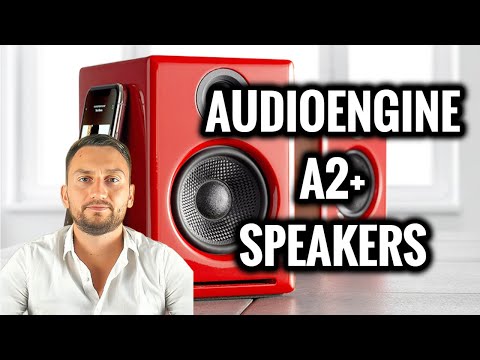
The square-edged cabinet and visible drivers give these compact desktop speakers a simple, studio-inspired look. They’re small enough for a bookshelf or a narrow work surface, though their depth is worth measuring if your desk sits close to a wall. The finish options have included black, white and red, with availability varying by version and retailer. There are no front grilles to hide the drivers, so the look is neat and uncluttered; the trade-off is that the cones are exposed to dust and curious fingers.
For a small office setup, that mix of solid MDF construction and modest size is a practical win: the speakers look at home beside a laptop, but don’t feel like disposable accessories. The rear bass ports do mean they need a little breathing room behind them, so they’re less suited to being pressed flat against a wall or squeezed into a tight cubby.
What's in the Box
The Audioengine A2+ package includes the essentials for getting a pair of powered desktop speakers ready to use, plus a few handy extras:
- Two speakers: one powered speaker and one passive speaker
- Speaker wire to connect the pair
- Power supply and AC power cord
- USB cable for a computer connection
- 3.5 mm audio cable for a phone, tablet or other wired source
- Microfiber speaker bags and a setup guide
The supplied cables make it easy to connect a laptop and get started without shopping for separate leads. The speaker wire is also a welcome inclusion: it saves a last-minute trip to an electronics shop when you’re setting the speakers up on opposite sides of a desk. Just check the included cable length against your layout, since a wide desk or shelf may call for a longer speaker cable. Package contents can vary slightly by region or model version.
Connectivity and Setup
Setting up the Audioengine A2+ is straightforward: connect the powered left speaker to the right speaker with the supplied cable, plug in the power supply, then choose how you want to feed audio. There’s no receiver or separate amplifier to fit on your desk.
Wired and wireless connections
| Input or output | Useful for |
|---|---|
| USB-B audio input | Connecting a computer for direct digital audio |
| Bluetooth 5.0 | Streaming wirelessly from a phone, tablet or laptop; aptX HD is supported with compatible devices |
| 3.5 mm input | Wired connections from a laptop, handheld console or other headphone-jack source |
| Stereo RCA input | Connecting a turntable with a built-in or separate phono preamp, or another line-level source |
| RCA output | Sending a signal to a powered subwoofer |
For a desk setup, USB is an easy choice: connect the speaker to your computer and select it as the audio output. For casual listening, Bluetooth pairing saves you from reaching behind the monitor every time you switch to your phone. You can also leave a wired source connected and use Bluetooth when needed.
There are a couple of limits to plan around. The A2+ has no optical input, so a TV with only optical audio will need a compatible converter. And a turntable without a built-in phono stage needs an external preamp before it can connect through RCA. Once everything is plugged in, the rear-mounted volume control works fine for initial setup, though you may still want to adjust volume from your computer or phone during everyday use.
Sound Quality
The Audioengine A2+ sounds bigger than its tiny cabinets suggest, especially at a desk. Its 2.75-inch aramid-fiber woofers keep voices and guitars clear, while the 0.75-inch silk-dome tweeters give cymbals and vocal detail a smooth, not sharp, edge. On a podcast, speech stays easy to follow; on a well-recorded acoustic track, you can pick out the pluck of a guitar without the treble getting brittle.
Clear mids, modest bass
Bass is the main trade-off. These compact desktop speakers can give a kick drum a satisfying thump, but they don’t reach far enough down to make deep synth notes or movie explosions feel full. The published frequency response starts at 65 Hz, which helps explain why the lowest notes have less weight than they do on larger bookshelf speakers. A bass line remains audible, but it won’t shake a desk. For casual listening, that restraint can be welcome: the low end is less likely to muddy voices or overwhelm a small room.
At sensible near-field listening levels, the stereo image is nicely focused. A singer sits between the speakers, and instruments spread across the space rather than bunching around the cabinets. Put on a live recording and you can hear some separation between the vocal and the instruments, though the A2+ won’t create the broad, room-filling scale of larger speakers. They sound most convincing when you’re seated close by, with the tweeters roughly level with your ears.
Turn the volume up and they remain listenable, but their size sets a limit: busy tracks lose some punch, and bass-heavy music can sound thinner than it does through a larger system. For a desk, bedroom, or compact listening spot, though, the balance is engaging and clear. These are small powered speakers for detailed close-up listening, not a substitute for a subwoofer or full-size hi-fi speakers.
Everyday Performance
As desktop speakers for a computer, the A2+ are easy to live with because they take up little desk space. Their compact cabinets can sit beside a monitor without pushing a keyboard or notebook out of the way, making them a practical fit for a small home-office setup. They work best at close range: at a desk, you can hear detail at modest volume without needing to fill the whole room.
That makes them handy for the everyday mix of video calls, music between tasks, and a game after work. Voices stay clear enough to follow while you type, and the speakers can make a laptop’s built-in audio feel thin by comparison. For late-night listening, keeping the volume sensible is easier in a small room than with larger speakers that are built to play across a wider space.
Small desk, simple routine
There are a couple of small usability quirks. The volume control is on the back of the right speaker, so it’s awkward to reach if the speaker sits close to a wall or monitor stand. Set the level once and adjust playback from your computer or phone, and it’s less of an issue. There’s also no remote, so people who want to change volume from across the room may prefer a different setup.
For everyday computer listening, the main limitation is scale rather than convenience. The A2+ suit a desk or compact room, but they won’t provide the broad, room-filling presentation of larger speakers. If you mostly work, watch shows, or listen to playlists from a few feet away, their small footprint and clear nearfield playback make them easy to keep in regular rotation.
Competitor Comparison
Compared with similarly sized desktop speakers, the Audioengine A2+ sits toward the premium end of the category. Its appeal is less about filling a room and more about offering a tidy, flexible setup for a desk where space is tight but basic computer speakers feel like a step down.
| Alternative | What it offers | Where the A2+ has an edge |
|---|---|---|
| Edifier MR4 | A larger 4-inch woofer and balanced TRS inputs, making it a sensible choice for a home-studio desk. | Bluetooth and a more living-room-friendly look. The MR4 is better suited to someone prioritising monitor-style connections over wireless convenience. |
| Kanto YU2 | A compact alternative with a USB DAC and subwoofer output, aimed at computer listening. | The A2+ adds Bluetooth, which can be handy for playing music from a phone without changing the computer setup. |
| Creative Pebble Pro | A much cheaper, USB-powered option that keeps cabling and desk clutter to a minimum. | More conventional powered-speaker connections and a more substantial upgrade path, including the option to connect a subwoofer. |
That difference shows up in ordinary desk use. For example, the MR4 may make more sense if your monitor and audio interface already use balanced cables; the A2+ is easier to share between a laptop and a phone. Its RCA subwoofer output also gives you a way to add deeper bass later, rather than replacing the speakers when your needs change.
The trade-off is value: buyers who mainly want louder, fuller sound for the money may prefer a larger pair such as the MR4. But for compact desktop speakers with Bluetooth, USB audio, and a subwoofer connection, the A2+ brings a useful mix of features that many budget computer speakers leave out.
Conclusion
The Audioengine A2+ makes the most sense as a pair of compact powered speakers for a desk, small office, or bedroom. They keep a laptop setup simple and sound more full and engaging than most built-in computer speakers, without needing a separate amplifier. For near-field listening—sitting a few feet away while working, gaming, or streaming music—they’re an easy upgrade to live with.
The main trade-off is scale. Their small cabinets can’t deliver the deep, room-filling bass of larger bookshelf speakers, so action films and bass-heavy tracks won’t have the same weight. The subwoofer output gives you a practical way to add low-end later, but buyers who want powerful bass straight out of the box should look at larger speakers.
For a clean desktop audio setup with Bluetooth and wired connections, these are a strong choice if you value sound quality over sheer volume. They cost more than basic computer speakers, but their solid build and flexible inputs make them a worthwhile long-term pick for a small listening space.
Pros & cons
Pros
- Compact, solid MDF construction
- Clear, detailed sound at close range
- USB, Bluetooth, 3.5 mm and RCA inputs
- Simple setup with built-in amplification
- Subwoofer output allows bass upgrade
Cons
- Limited deep bass and overall punch
- Not suited to room-filling playback
- Rear volume control is awkward; no remote
- Premium price for compact speakers
Frequently Asked Questions
No, you should not connect the Audioengine A2+ speakers to the speaker outputs of a stereo receiver. The A2+ speakers have built-in amplifiers, so they should be connected directly to a source using the RCA or 3.5mm inputs on the powered speaker.
The Audioengine A2+ speakers offer Bluetooth aptX, USB, and analog inputs (RCA and 3.5mm), allowing you to connect them to a variety of devices.
To pair the Audioengine A2+ speakers with your Bluetooth device, turn on the speakers and put them into pair mode. Then, select 'Audioengine A2+' from your device's Bluetooth settings to connect.
You cannot connect headphones directly to the Audioengine A2+ speakers. To use headphones, you would need an external headphone amplifier, such as the Audioengine D1, connected to the speakers via RCA cables.
The Audioengine A2+ speakers have a total peak power output of 60 watts, with 15 watts RMS per channel.
Yes, you can connect a subwoofer to the Audioengine A2+ speakers using the variable RCA output on the back of the powered speaker.
The Audioengine A2+ speakers have a frequency response of 65Hz to 22kHz ±2.0dB.
Yes, the Audioengine A2+ speakers are magnetically shielded, allowing them to be safely placed near TVs or other sensitive devices.
Audioengine provides a comprehensive 3-year warranty for the A2+ speakers, along with a 30-day home audition period.
Yes, you can connect the Audioengine A2+ speakers to a Sonos setup using an analog output from the Sonos device to the RCA inputs on the A2+ speakers.
Important
Before buying any product, check all details of this product on the website or in the store where you purchase it. Aspects and specifications mentioned in the text above might differ.

Written by Marije Strooberg
Marije Strooberg, based in Groningen, The Netherlands, is a renowned expert in audio product reviews, specializing in mobile, HiFi, and PC speakers. With nine years of experience, her insightful critiques are trusted by readers seeking informed purchasing decisions. Marije's self-taught background and passion for music and technology enable her to communicate complex audio concepts with clarity, making her a respected voice in the sound technology industry.
Her reviews are praised for their balance of technical detail and accessible language, often including product comparisons and practical advice. Beyond her professional work, Marije enjoys exploring new cultures and testing portable speakers in diverse environments, infusing her writing with personal experiences. Committed to sustainability, she also volunteers with local organizations to promote eco-friendly consumer habits and highlights environmentally responsible audio companies in her reviews.
Read more about MarijeWhere to buy
More Audioengine reviews
Videos
-

-
 Are the $269 Audioengine A2+ Speakers Worth Your Money?Erin's Audio Corner
-
-
 Audioengine A2+ Desktop Speaker ReviewLinus Tech Tips
-

-


