-
LatestThe best Speaker of 2026
-
 Ultimate Ears Megaboom 4 Rugged 360-degree Bluetooth sound for outdoor gatherings
-
 Ultimate Ears Boom 4 Rugged 360-degree portable sound for gatherings anywhere.
-
 Ultimate Ears Wonderboom 4 Rugged, compact Bluetooth sound for everyday outdoor adventures.
-
 Turtlebox Ranger Rugged, loud portable speaker built for outdoor adventures.
-
 House of Marley Get Together 3 Portable speaker with warm sound and sustainable materials
-
 Turtlebox Original Gen 3 Rugged, powerful outdoor sound built for all-day adventures.
-
-
LatestThe best Speaker of 2026
-
 Onkyo GX-10DB Compact powered desktop speakers with versatile everyday connectivity
-
 Onkyo GX-30ARC Versatile powered stereo speakers for desks and TVs
-
 Audioengine HD6 Rich, flexible stereo sound without a separate amplifier.
-
 Mackie CR8BT Large, bass-rich desktop speakers for studios, gaming, and everyday listening.
-
 Mackie CR5BT Versatile Bluetooth monitors for music, work, and production.
-
 KEF LSX II LT Compact powered speakers with streaming and HDMI ARC
-
-
LatestThe best Speaker of 2026
-
 Yamaha NS-F 51 Smooth, affordable floorstanders for music and movie nights
-
 Q Acoustics 5040 Floorstanders deliver clear vocals, controlled bass, spacious sound.
-
 Q Acoustics 3050i Hifi Warm, room-filling floorstanders for music and movie nights.
-
 Q Acoustics M40 Room-filling stereo sound with simple all-in-one connectivity.
-
 Polk Audio T50 Warm, affordable towers for music and home theater
-
 KEF Q550 Slim towers, clear vocals, spacious imaging, controlled bass.
-
-
LatestThe best Speaker of 2026
-
 Logitech Z207 2.0 Compact Bluetooth desktop speakers for clear everyday audio
-
 Edifier G2000 Compact gaming speakers with connectivity and RGB lighting
-
 Edifier R1855DB Fuller desktop sound with flexible wired and wireless connectivity.
-
 Edifier R1280T Affordable powered speakers offer warm, clear everyday sound.
-
 Audioengine A2+ Compact powered speakers deliver clear, flexible desktop sound.
-
 Logitech Z313 Compact 2.1 desktop speakers deliver fuller everyday audio.
-
-
LatestThe best Headphone of 2026
-
 Sony 1000X THE COLLEXION Zwart Foldable noise-cancelling headphones with rich sound and comfort
-
 Bose QuietComfort Ultra Headphones (Gen 2) Premium travel audio: immersive sound, comfort, powerful cancellation.
-
 Sony WH-1000XM6 Premium noise-cancelling headphones for travel, work, and comfort.
-
 JBL Tour One M3 Smart TX Premium noise-cancelling headphones with a travel-ready audio transmitter
-
 Cleer Audio Enduro ANC Affordable headphones with cancellation and marathon battery life
-
 Cleer Audio Alpha Detailed sound, strong noise cancellation, and all-day battery life.
-
-
LatestThe best Headphone of 2026
-
 Jabra Evolve 20SE UC Stereo Lightweight wired headset for clear everyday office calls
-
 Jabra Evolve 40 UC Wired headset delivers clear calls and convenient controls
-
 Philips TAH4205 Compact wireless headphones with punchy bass and quick charging
-
 Jabra Evolve2 65 Flex MS Foldable Teams headset for clear, portable hybrid-work calls.
-
 JBL JR310BT Kid-friendly wireless audio with an 85 dB limit
-
 Sony WH-CH520 Lightweight headphones, long battery life, effortless pairing.
-
-
LatestThe best Headphone of 2026
-
 Cleer Audio ARC 3 Open-ear comfort, rich features, everyday awareness.
-
 Samsung Buds FE Affordable everyday earbuds with ANC and a secure fit
-
 Sennheiser Momentum Sport Workout earbuds with heart-rate tracking and punchy sound
-
 Sony LinkBuds Fit Comfortable, secure earbuds for commutes and workouts.
-
 JBL Live Buds 3 Feature-rich earbuds with touchscreen case and customizable sound.
-
 Bowers & Wilkins Pi8 Premium earbuds offer detailed sound and travel-ready versatility
-
-
LatestThe best Headphone of 2026
-
 HyperX Cloud Alpha Wireless A long-lasting gaming headset built for marathon sessions.
-
 Razer Kraken V4 Feature-rich wireless gaming headset for multi-device play
-
 Turtle Beach Stealth 700 GEN3 Flexible gaming audio, Bluetooth, and exceptional battery endurance.
-
 Logitech G535 Lightspeed Wireless Lightweight comfort and reliable PC, PlayStation gaming audio
-
 Corsair Void RGB Elite Wireless Comfortable PC gaming headset with punchy audio
-
 Corsair HS80 RGB Wireless Comfortable gaming headset with clear audio and microphone
-
-
LatestThe best Home audio system of 2026
-
 Sony Bravia Theatre Bar 8 Premium Dolby Atmos sound with a tidy, expandable single-bar design.
-
 TCL S45H 2.0 Compact budget soundbar boosts dialogue with virtual surround.
-
 TCL S55H 2.1 Compact soundbar delivers clearer dialogue, cinematic sound, and wireless bass.
-
 TCL Q85H Immersive Dolby Atmos cinema sound, without receiver hassle.
-
 Harman Kardon Enchant 1100 Premium soundbar brings immersive cinema and clear dialogue
-
 Harman Kardon Enchant 900 Compact Atmos soundbar with clear dialogue and spacious sound.
-
-
LatestThe best Home audio system of 2026
-
 Google TV Streamer 4K Polished streaming and smart-home hub for everyday viewing
-
 Apple TV 4K (Wi-Fi) Premium streaming with polished menus and seamless integration.
-
 Nvidia Shield TV Pro Versatile 4K streamer for local media and gaming
-
-
LatestThe best Home audio system of 2026
-
 Pioneer VSX-LX305 Immersive nine-channel home theater with Dirac Live correction.
-
 Denon AVC-X3800H Expandable home theater power with Atmos and gaming connectivity.
-
 Pioneer VSX-LX505 Flexible Atmos receiver with Dirac Live, gaming support
-
 JBL MA510 Straightforward 5.2-channel home theater with modern gaming connectivity.
-
 JBL MA310 Straightforward 5.2-channel surround sound for 4K home theaters
-
 Denon AVR-S970H Flexible 7.2-channel receiver for immersive, modern home theaters
-
-
LatestThe best Home audio system of 2026
-
 Denon PMA-1700NE Versatile stereo amp for vinyl and digital music
-
 Pioneer A-40AE Balanced stereo sound, versatile analog and digital connections.
-
 Audiolab 6000A Versatile stereo amplification with clear sound and connectivity
-
 Denon PMA-900HNE Streaming stereo amplifier for vinyl, TV, and playlists
-
 LEAK Stereo 130 Versatile, stylish amplifier for vinyl, digital audio, and Bluetooth.
-
 Yamaha A-S701 Powerful, versatile stereo amplification for traditional home hi-fi.
-
-
LatestThe best Home audio system of 2026
-
 Mackie CR8S Compact studio subwoofer adds controlled low-end depth to nearfield monitors.
-
 Audioengine S8 Compact powered subwoofer adds balanced bass to small stereo setups.
-
 KEF Kube 12 MIE Active Subwoofer Controlled, room-filling bass for music and cinematic impact.
-
 Klipsch R-12SW Powerful, room-filling bass for movies and music.
-
 Klipsch R-121SW Powerful, room-filling bass for movies and music.
-
 Bose Bass Module 500 Compact subwoofer adds fuller sound to compatible soundbars.
-
Audioengine HD6 review
Audioengine HD6 review: Explore the warm, full-bodied stereo sound, Bluetooth, optical and RCA connections, plus key trade-offs for TV and streaming setups.
check best price


 2025-12-15
- By Suzanne Mads
Summary / TL;DR

The Audioengine HD6 is a substantial pair of powered bookshelf speakers with optical, RCA and aptX Bluetooth connections, making them suitable for TVs, turntables with a phono preamp, computers and phones. Their warm, full-bodied sound delivers clear vocals, a convincing stereo image and ample bass for most music, though deep bass and high-volume performance are limited compared with larger systems. A remote and subwoofer output add convenience and flexibility. The cabinets are well finished but need more shelf space than compact speakers. The HD6 lacks Wi-Fi streaming, HDMI ARC, app control and room correction, so rivals may better suit users seeking smart features or simpler TV integration. They are best suited to listeners who want straightforward stereo sound from several sources without a separate amplifier.
If you like this review, you might also like our review on the Audio-Technica ATH-SP3X or Audioengine A2-HD / HD3 or Audioengine A5+.
Where to buy
 Best offers of the Audioengine HD6 at Amazon.com
Want to help us grow? When you purchase items through the above links we receive a small commission.
Introduction
The Audioengine HD6 is a pair of premium powered bookshelf speakers for listeners who want a proper stereo setup without buying a separate amplifier. They sit between compact desktop speakers and larger hi-fi systems: substantial enough for music in a living room, yet practical on a desk or media console. Their built-in amplification and Bluetooth make them an easy fit for everyday listening, from a focused album session to background music while you cook.
They also make sense for a simple home audio setup that brings different sources together, such as a TV, turntable with a phono preamp, and phone. The trade-off is that the HD6 isn’t a Wi-Fi smart speaker, so it lacks built-in voice control and the convenience of a multiroom streaming platform. For listeners who care more about stereo sound and flexible bookshelf speakers than app-based features, that may be a fair exchange.
Related reviews


Design and Build Quality
The Audioengine HD6 has the proportions of a traditional bookshelf speaker, but its finish gives it a more furniture-like feel than a plain black box. The cabinet is made from MDF, a dense material commonly used in speaker enclosures because it resists unwanted panel vibration. Choose from real wood veneer or painted finishes, depending on the version; the walnut option has visible grain that looks at home beside a timber desk or sideboard.
Cabinet Size and Finish
At about 11.75 inches tall and 10 inches deep, each speaker needs more space than a compact desktop monitor. Check the depth of your shelf before buying: the cabinets can sit neatly on a wide bookcase, but they may overhang a shallow one. Their clean, squared-off shape is easy to place, and the removable front grilles let you choose between a softer, covered look and a more technical appearance.
The finish feels considered, though glossy versions can show fingerprints and catch reflections from nearby windows or lamps. These are also fairly substantial cabinets, so a flimsy shelf is not the best spot for them. Overall, the HD6 is a well-finished pair of powered bookshelf speakers that looks polished without relying on flashy trim or oversized branding.
What’s in the Box
The Audioengine HD6 box includes the basics for getting the speakers ready, plus a few handy extras for storage and day-to-day use:
- One powered speaker and one passive speaker
- 8-foot speaker wire to connect the pair
- AC power cable and Bluetooth antenna
- Remote control
- Microfiber speaker bags and cleaning cloth
- Setup guide
The included speaker wire saves you a separate purchase, and its 8-foot length is usually enough for a desk or a modest living-room setup. If you’re placing the speakers far apart, measure first; you may want longer wire. The box doesn’t include every cable you might need to connect a TV, turntable, or other source, so check the inputs on your gear before setup.
Setup and Connectivity
Connecting the HD6 is straightforward once you spot that the right speaker is the powered one. That’s where the inputs and controls live. Run the supplied speaker cable from it to the left speaker, connect the power cable, and you’re ready to add a source. The speakers don’t need a separate amplifier or receiver.
Connections for a TV, turntable, or computer
For a TV or game console, use the optical TOSLINK input on the rear of the right speaker. It’s a tidy way to send digital audio without adding a receiver to your setup. One small catch: many TVs send a fixed-level signal over optical, so you may need to adjust listening volume with the supplied remote or the speaker’s rear dial rather than the TV remote. Check the TV’s audio-output settings if you get silence or an awkwardly low level.
The stereo RCA inputs suit a turntable with a built-in phono preamp, a CD player, or another line-level source. A turntable without a built-in preamp needs an external one before it can connect. For a laptop or desktop with a headphone output, a 3.5mm-to-RCA cable will do the job; the speakers also have Bluetooth, so a cable-free connection is an option.
Bluetooth pairing and everyday use
Bluetooth pairing is handy when you want to stream from a phone without reaching behind the speakers. Attach the included antenna, select the speakers from your device’s Bluetooth menu, and you can play music from across the room. The HD6 supports aptX Bluetooth with compatible devices, though the connection falls back to the format your phone supports. As with any Bluetooth speaker system, walls and nearby wireless devices can affect range.
There’s no HDMI or USB audio input, so this isn’t a direct plug-in USB setup for a computer, and a TV needs an optical output or a suitable converter. For most living-room and desk arrangements, though, the mix of optical, RCA, and Bluetooth covers the usual sources without extra switching gear.
Features and Controls
The HD6 keeps its controls simple: a rear-panel volume knob handles everyday level changes, while the included remote lets you adjust volume and mute from across the room. That’s handy when the speakers sit on a desk or bookshelf and the active speaker’s back panel is hard to reach.
Inputs, DAC and useful extras
For a pair of powered bookshelf speakers, the connection options are refreshingly practical. You get Bluetooth with aptX, stereo RCA analog input and an optical digital input. The optical connection feeds the built-in 24-bit DAC, making it a useful choice for a TV or another digital source. Bluetooth suits casual listening from a phone, while RCA keeps a turntable with a phono preamp or a separate audio component in the mix.
A variable-level RCA output can feed a subwoofer, so you can add more low-end later without replacing the speakers. There’s no companion app, built-in EQ or headphone jack, though. You make adjustments with the physical controls and the remote rather than tuning sound from your phone. For listeners who prefer straightforward stereo gear over app-based features, that’s a sensible trade-off.
Sound Quality
The Audioengine HD6 has a warm, full-bodied sound that suits everyday listening better than strict studio monitoring. Its 5.5-inch aramid-fiber woofers give bass lines real weight: on a well-recorded funk track, a bass guitar sounds rounded and distinct rather than reduced to a soft thump. The low end is generous for bookshelf speakers, though deep electronic sub-bass loses some rumble. A subwoofer can fill that gap, but most pop, rock and acoustic music won’t demand one.
Clear vocals and a roomy stereo image
Vocals sit forward enough to follow easily without sounding sharp. In a busy mix, such as a rock song with layered guitars and backing vocals, the HD6 keeps the main singer clear while giving the other parts room around them. The 1-inch silk-dome tweeters add a smooth top end; cymbals and bright acoustic guitar have detail, but they’re less likely to turn tiring during a long listening session.
Set the speakers apart on a desk or stand, angled toward your seat, and they create a convincing stereo image. A singer tends to stay centred, while instruments spread beyond the cabinets. The effect is most precise at a normal near-field listening distance; move far off to one side and the balance shifts, as it does with many conventional stereo speakers.
Good dynamics, with limits at high volume
These powered bookshelf speakers play loud enough for a living room and keep their composure through everyday listening. They can make a quiet vocal passage feel intimate, then give a full chorus a satisfying lift. Push the volume hard in a large room, though, and they won’t deliver the effortless scale or deep-bass impact of bigger speakers paired with a subwoofer. Their best quality is an easy, engaging balance—not bone-dry neutrality or huge, room-shaking bass.
Competitor Comparison
The Audioengine HD6 sits between straightforward Bluetooth bookshelf speakers and feature-packed wireless systems. Its appeal is the classic stereo setup: connect a turntable, TV or separate streamer, and you’re not tied to a brand-specific app or streaming platform. The trade-off is that some rivals handle TV audio and network streaming more neatly.
| Speaker | Best fit | Key difference |
|---|---|---|
| Audioengine HD6 | Listeners who want a simple stereo system with Bluetooth and traditional inputs | Optical, RCA and aptX Bluetooth connectivity, but no HDMI ARC or built-in Wi-Fi streaming |
| Klipsch The Fives | TV setups and listeners who want more built-in connections | Includes HDMI ARC and a phono input, so it can connect directly to many TVs and turntables |
| KEF LSX II | Small rooms where streaming and app control matter | Adds Wi-Fi streaming, AirPlay 2, Chromecast and HDMI ARC, but usually costs more |
For a desk or living-room stereo, the HD6 keeps things refreshingly direct. You can connect a TV through optical and switch to a Bluetooth source without building a full component system. But a TV owner who wants one remote to control volume and power may prefer The Fives: HDMI ARC makes that kind of everyday use easier, and the built-in phono input can save the cost of a separate phono preamp.
The KEF LSX II is the stronger choice for listeners who stream music over Wi-Fi or want services and multiroom features built into the speakers. That convenience comes with a higher price and a more app-led experience. By comparison, the HD6 makes more sense if you already own a turntable, streamer or other source and simply want capable powered bookshelf speakers to play it through. Its main limitation against newer rivals is clear: it doesn’t offer HDMI ARC or built-in network streaming.
Conclusion
The Audioengine HD6 makes a strong case for powered bookshelf speakers when you want a proper stereo system without adding a separate amplifier to the shelf. They suit a living room or a roomy desk setup especially well: music, TV audio and a turntable can share one pair of speakers, and you can still move them to another room without rebuilding the system around them.
They’re not the smallest option, and the straightforward feature set skips app-based room correction and streaming over Wi-Fi. That matters if you want multiroom playback or automatic tuning, but less so if you value simple controls and a solid sound from a few trusted sources. For a small bedroom, they may be more speaker than you need; in a medium-sized room, they offer an appealing mix of convenience and full-bodied stereo sound.
Bottom line: the HD6 is a satisfying choice for listeners who want an easy-to-live-with stereo pair and are willing to give it some shelf space. It isn’t a budget shortcut or a feature-packed smart speaker. It’s a capable, self-contained system that can make a regular evening playlist feel like an occasion without asking you to assemble a rack of hi-fi gear.
Pros & cons
Pros
- Warm, full-bodied sound
- Clear vocals and smooth treble
- Convincing stereo imaging
- Optical, RCA, and aptX Bluetooth
- Built-in amplification and remote
Cons
- No Wi-Fi streaming or HDMI ARC
- Large cabinets need shelf space
- Limited deep bass and high-volume scale
- No USB audio input
Frequently Asked Questions
The Audioengine HD6 are powered bookshelf speakers with 50W RMS per channel (150W peak total) Class AB amplifiers. They feature 5.5-inch aramid fiber woofers and 1-inch silk dome tweeters, delivering a frequency response of 50Hz-22kHz. Built-in Bluetooth 5.0 with aptX HD supports up to 100ft range, plus optical input up to 24-bit/192kHz. SNR exceeds 95dB with THD+N under 0.05%, ensuring clean, detailed sound for music and home theater.
Yes, the Audioengine HD6 features built-in Bluetooth 5.0 with aptX HD for high-fidelity wireless streaming from phones, tablets, or computers. It supports aptX HD, aptX, AAC, and SBC codecs with up to 100ft range and ~30ms latency. The integrated AKM DAC upsamples to 24-bit for superior signal-to-noise ratio, delivering impressive low-noise Bluetooth audio compatible with any Bluetooth device.
The Audioengine HD6 offers versatile connectivity: 3.5mm stereo mini-jack, RCA L/R analog inputs, digital optical (SPDIF) up to 24-bit/192kHz, and Bluetooth aptX HD. It also includes a variable RCA line-out for subwoofers or additional speakers. This setup allows easy connection to TVs, computers, turntables, or streaming devices for seamless audio integration.
The Audioengine HD6 delivers 50W RMS per channel (100W total RMS) with 75W peak per channel (150W total peak) from its analog Class AB monoblock amplifiers built into the left speaker. This provides ample power for large rooms, driving the 5.5-inch woofers and 1-inch tweeters with clarity and dynamics, outperforming many traditional setups without needing external amps.
The Audioengine HD6 employs custom 5.5-inch aramid fiber (Kevlar) woofers for tight bass and detailed midrange, paired with 1-inch silk dome tweeters for smooth, accurate highs. Housed in 20mm thick MDF cabinets with internal damping, these drivers deliver a balanced 50Hz-22kHz response, ideal for critical listening in home audio systems.
Setup for the Audioengine HD6 is simple: plug the left active speaker into AC power (115/240V switchable), connect the included speaker wire to the right passive speaker, then link your source via Bluetooth, optical, RCA, or 3.5mm input. No external amp needed—built-in amps and all-tuned components ensure signature Audioengine sound right out of the box.
Each Audioengine HD6 speaker measures 11.75" H x 7.25" W x 10" D. The active left speaker weighs 17.5 lbs, while the passive right is 12.5 lbs. Their bookshelf-friendly design fits desks or stands, with a rear port and heatsink for optimal performance and cooling in any setup.
Yes, the Audioengine HD6 includes a variable RCA line-out (2.0V RMS max, 47ohm impedance) for easy subwoofer connection. This full-range output allows integration with powered subs to extend bass response below 50Hz, perfect for enhancing movies, music, or gaming without compromising the speakers' natural sound.
The Audioengine HD6 excels with >95dB SNR, <0.05% THD+N, and <-50dB crosstalk for pristine, low-distortion audio. Custom drivers, toroidal transformers, and AKM DAC deliver detailed highs, punchy mids, and solid bass. Reviewers praise its neutral, engaging sound for desktop, living room, or hi-fi use.
Absolutely, the Audioengine HD6 shines in home theater with optical input for TVs (up to 24/192kHz), low-latency Bluetooth, and powerful output for immersive sound. Dual inputs handle multiple sources, while line-out supports subs. Its accurate imaging and dynamics make it ideal for movies, gaming, and music in small to medium rooms.
Important
Before buying any product, check all details of this product on the website or in the store where you purchase it. Aspects and specifications mentioned in the text above might differ.

Written by Suzanne Mads
Suzanne Mads is a renowned review writer with a decade of experience in the audio industry, specializing in mobile speakers, headphones, and hi-fi speakers. Her passion for music and technology drives her commitment to delivering honest and comprehensive evaluations, making her a trusted voice for consumers. With a degree in Audio Engineering, Suzanne combines technical expertise with a keen listener's perspective, offering reviews that are both informative and accessible. She is a regular contributor to high-profile tech magazines and speaks at audio tech conferences, bringing insights and industry forecasts to a wide audience.
Read more about SuzanneWhere to buy
More Audioengine reviews
Videos
-
-

-
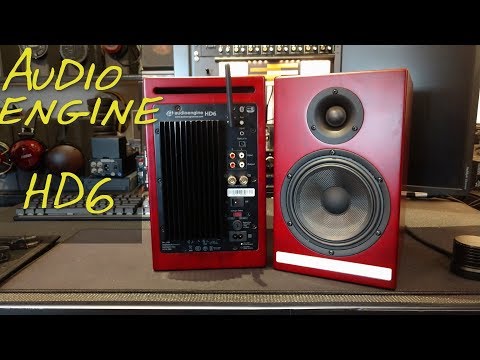
 Best Desktop Speakers? Audioengine HD6 ReviewSnazzy Labs
-

-

-
 Audioengine HD6 Powered Speakers ReviewAudio Advice


