-
LatestThe best Speaker of 2026
-
 Ultimate Ears Megaboom 4 Rugged speaker with 360° sound and deep bass.
-
 Ultimate Ears Boom 4 Portable speaker: 360° sound, durable, perfect for adventures.
-
 Ultimate Ears Wonderboom 4 Portable speaker with style, durability, and great sound.
-
 Turtlebox Ranger Rugged outdoor speaker with powerful, clear sound.
-
 House of Marley Get Together 3 Eco-friendly speaker with rich sound and stylish design.
-
 Turtlebox Original Gen 3 Rugged, portable speaker with powerful sound and durability.
-
-
LatestThe best Speaker of 2026
-
 Onkyo GX-10DB Compact speakers with premium sound and versatile connectivity.
-
 Onkyo GX-30ARC Compact speakers delivering impressive sound and sleek design.
-
 Audioengine HD6 HiFi speakers for rich sound and seamless connectivity.
-
 Mackie CR8BT Premium sound quality with Bluetooth convenience.
-
 Mackie CR5BT Affordable studio monitors with Bluetooth connectivity, great sound.
-
 KEF LSX II LT Compact powered speakers with streaming and HDMI ARC
-
-
LatestThe best Speaker of 2026
-
 Yamaha NS-F 51 Smooth, affordable floorstanders for music and movie nights
-
 Q Acoustics 5040 Floorstanders deliver clear vocals, controlled bass, spacious sound.
-
 Q Acoustics 3050i Hifi Warm, room-filling floorstanders for music and movie nights.
-
 Q Acoustics M40 Room-filling stereo sound with simple all-in-one connectivity.
-
 Polk Audio T50 Warm, affordable towers for music and home theater
-
 KEF Q550 Slim towers, clear vocals, spacious imaging, controlled bass.
-
-
LatestThe best Speaker of 2026
-
 Logitech Z207 2.0 Affordable PC speakers with versatile connectivity options.
-
 Edifier G2000 Compact speakers with powerful sound, perfect for desks.
-
 Edifier R1855DB Fuller desktop sound with flexible wired and wireless connectivity.
-
 Edifier R1280T Affordable powered speakers offer warm, clear everyday sound.
-
 Audioengine A2+ Compact powered speakers deliver clear, flexible desktop sound.
-
 Logitech Z313 Compact 2.1 desktop speakers deliver fuller everyday audio.
-
-
LatestThe best Headphone of 2026
-
 Sony 1000X THE COLLEXION Zwart Sleek headphones with immersive sound and adaptive noise cancellation.
-
 Bose QuietComfort Ultra Headphones (Gen 2) Immersive sound, top-notch noise cancellation, ultimate comfort.
-
 Sony WH-1000XM6 High-performance headphones with exceptional sound and features.
-
 JBL Tour One M3 Smart TX Premium noise-cancelling headphones with a travel-ready audio transmitter
-
 Cleer Audio Enduro ANC Affordable headphones with cancellation and marathon battery life
-
 Cleer Audio Alpha Detailed sound, strong noise cancellation, and all-day battery life.
-
-
LatestThe best Headphone of 2026
-
 Jabra Evolve 20SE UC Stereo Lightweight wired headset for clear everyday office calls
-
 Jabra Evolve 40 UC Wired headset delivers clear calls and convenient controls
-
 Philips TAH4205 Compact wireless headphones with punchy bass and quick charging
-
 Jabra Evolve2 65 Flex MS Foldable Teams headset for clear, portable hybrid-work calls.
-
 JBL JR310BT Kid-friendly wireless audio with an 85 dB limit
-
 Sony WH-CH520 Lightweight headphones, long battery life, effortless pairing.
-
-
LatestThe best Headphone of 2026
-
 Cleer Audio ARC 3 Open-ear comfort, rich features, everyday awareness.
-
 Samsung Buds FE Affordable everyday earbuds with ANC and a secure fit
-
 Sennheiser Momentum Sport Workout earbuds with heart-rate tracking and punchy sound
-
 Sony LinkBuds Fit Comfortable, secure earbuds for commutes and workouts.
-
 JBL Live Buds 3 Feature-rich earbuds with touchscreen case and customizable sound.
-
 Bowers & Wilkins Pi8 Premium earbuds offer detailed sound and travel-ready versatility
-
-
LatestThe best Headphone of 2026
-
 HyperX Cloud Alpha Wireless Wireless headphones: immersive sound, long-lasting battery life.
-
 Razer Kraken V4 Immersive gaming headset with comfort and sound quality.
-
 Turtle Beach Stealth 700 GEN3 Flexible gaming audio, Bluetooth, and exceptional battery endurance.
-
 Logitech G535 Lightspeed Wireless Lightweight comfort and reliable PC, PlayStation gaming audio
-
 Corsair Void RGB Elite Wireless Comfortable PC gaming headset with punchy audio
-
 Corsair HS80 RGB Wireless Comfortable gaming headset with clear audio and microphone
-
-
LatestThe best Home audio system of 2026
-
 Sony Bravia Theatre Bar 8 Premium Dolby Atmos sound with a tidy, expandable single-bar design.
-
 TCL S45H 2.0 Compact budget soundbar boosts dialogue with virtual surround.
-
 TCL S55H 2.1 Compact soundbar delivers clearer dialogue, cinematic sound, and wireless bass.
-
 TCL Q85H Immersive Dolby Atmos cinema sound, without receiver hassle.
-
 Harman Kardon Enchant 1100 Premium soundbar brings immersive cinema and clear dialogue
-
 Harman Kardon Enchant 900 Compact Atmos soundbar with clear dialogue and spacious sound.
-
-
LatestThe best Home audio system of 2026
-
 Google TV Streamer 4K Polished streaming and smart-home hub for everyday viewing
-
 Apple TV 4K (Wi-Fi) Premium streaming with polished menus and seamless integration.
-
 Nvidia Shield TV Pro Versatile 4K streamer for local media and gaming
-
-
LatestThe best Home audio system of 2026
-
 Pioneer VSX-LX305 Immersive nine-channel home theater with Dirac Live correction.
-
 Denon AVC-X3800H Expandable home theater power with Atmos and gaming connectivity.
-
 Pioneer VSX-LX505 Flexible Atmos receiver with Dirac Live, gaming support
-
 JBL MA510 Straightforward 5.2-channel home theater with modern gaming connectivity.
-
 JBL MA310 Straightforward 5.2-channel surround sound for 4K home theaters
-
 Denon AVR-S970H Flexible 7.2-channel receiver for immersive, modern home theaters
-
-
LatestThe best Home audio system of 2026
-
 Denon PMA-1700NE Versatile stereo amp for vinyl and digital music
-
 Pioneer A-40AE Balanced stereo sound, versatile analog and digital connections.
-
 Audiolab 6000A Versatile stereo amplification with clear sound and connectivity
-
 Denon PMA-900HNE Streaming stereo amplifier for vinyl, TV, and playlists
-
 LEAK Stereo 130 Versatile, stylish amplifier for vinyl, digital audio, and Bluetooth.
-
 Yamaha A-S701 Powerful, versatile stereo amplification for traditional home hi-fi.
-
-
LatestThe best Home audio system of 2026
-
 Mackie CR8S Enhance audio with deep, rich bass performance.
-
 Audioengine S8 Compact powered subwoofer adds balanced bass to small stereo setups.
-
 KEF Kube 12 MIE Active Subwoofer Controlled, room-filling bass for music and cinematic impact.
-
 Klipsch R-12SW Powerful, room-filling bass for movies and music.
-
 Klipsch R-121SW Powerful, room-filling bass for movies and music.
-
 Bose Bass Module 500 Compact subwoofer adds fuller sound to compatible soundbars.
-
Audioengine S8 review
Audioengine S8 review: See how this compact 8-inch powered subwoofer adds balanced bass to bookshelf speakers, desktop setups, music and movies.
check best price


 2025-07-26
- By Lisanne Zegwaardt
Summary / TL;DR

The Audioengine S8 is a compact, powered 8-inch subwoofer designed to add bass to bookshelf speakers and desktop stereo systems. Its 125-watt RMS amplifier, 50–130 Hz crossover, volume control and phase switch provide basic adjustment, while RCA and LFE inputs support stereo and home-theater connections. The 11.25-inch cabinet is relatively easy to place, though its 30-pound weight makes it less convenient to move. In small rooms, it adds useful weight to music, films and games at moderate listening levels. Bass can become prominent if poorly balanced, and the S8 lacks the output and deep, room-filling impact of larger subwoofers. At around $349, it may suit regular use in a compact setup; occasional or high-output listening may favor a less expensive or larger alternative. Audioengine lists a three-year warranty.
Where to buy
 Best offers of the Audioengine S8 at Amazon.com
Want to help us grow? When you purchase items through the above links we receive a small commission.
Introduction
The Audioengine S8 is an 8-inch powered subwoofer made to add weight to a compact stereo or desktop setup without demanding the floor space of a large home-theater sub. That makes it a practical match for bookshelf speakers: they can handle voices and detail, while the sub fills in the lower notes that tend to go missing in a small room.
You’ll notice the difference most with music that has a firm bass line, or a film watched at a desk where laptop speakers leave action scenes sounding thin. Its 250-watt peak rating points to useful headroom for everyday listening, though this is still a compact subwoofer, not a substitute for a big unit built to pressurize a dedicated theater room. This review looks at how well the S8 fits that middle ground: stronger bass for bookshelf speakers, in a size that makes sense for an office or living room.
Related reviews


What's in the Box
The Audioengine S8 package keeps things simple: you get the powered subwoofer, a power cable, an RCA audio cable, and the owner’s documentation. The included RCA cable is handy for connecting the subwoofer to a stereo receiver or a speaker system with a subwoofer output, so you may not need to buy a separate cable before setting it up.
- Audioengine S8 powered subwoofer
- Power cable
- RCA audio cable
- Owner’s documentation
There’s no wireless transmitter in the box, and the package doesn’t include speaker wire or a separate amplifier. That’s not a problem for a powered subwoofer, but it’s worth checking your source has a compatible output before ordering. Box contents can vary slightly by retailer or region, so check the listing if you’re buying a bundle.
Design and Build Quality
The Audioengine S8 keeps its appearance simple: a near-cube cabinet measuring about 11.25 inches on each side, with a clean finish in black or white. That compact footprint makes it easier to tuck beside a media console or under a desk than a tall, wide subwoofer cabinet. At roughly 30 pounds, though, it has more heft than its size suggests, so it’s sturdy rather than something you’ll want to shift around every day.
Compact cabinet, practical details
The enclosure uses MDF, a dense wood-fiber material commonly used in speaker cabinets to help limit unwanted panel vibration. Its plain, squared-off design doesn’t draw much attention in a room, and the down-firing 8-inch driver keeps the main cone out of sight. That can be handy in a living room where a visible speaker cone might invite curious fingers or paws. The trade-off is that you can’t judge the driver’s condition at a glance.
The S8’s small footprint is useful in tight layouts, but its cubic shape still takes up a real patch of floor. Measure the space before buying, especially if you plan to slide it beneath a low sofa or cabinet; the cabinet is 11.25 inches tall before allowing for any clearance. Overall, the build feels solid and purposefully understated, with the size and hidden driver doing more for everyday practicality than decorative flair.
Setup and Connectivity
Connecting the Audioengine S8 is straightforward with a stereo system: run a pair of RCA cables from your source or preamp to the subwoofer’s left and right inputs, then use its RCA outputs to feed powered speakers. That makes it handy for a desk setup where a computer interface or preamp sits between the laptop and speakers. Just check what your speakers need; the RCA outputs pass the signal along, so don’t assume they remove bass from the speakers.
For a home-theater receiver, connect its mono subwoofer/LFE output to the S8’s LFE input. This is usually a single RCA cable, often with a longer run if the sub sits beside a couch rather than near the TV stand. Keep the cable away from power bricks where you can, since a tidy route is easier to troubleshoot if you hear hum.
Placement takes a little trial and error. Start near the front speakers, leave enough slack in the RCA cable to shift the cabinet, and try a spot along the front wall before tucking it into a corner. A corner can make bass sound stronger, but in a small room it may also exaggerate a few notes. The S8 uses a wired connection, so there’s no wireless transmitter to pair or charge; you’ll just need an available power outlet near the final location.
Controls and Features
The rear panel keeps the controls simple: a crossover knob, a volume knob and a 0°/180° phase switch. There’s no display or menu to slow you down; you make the adjustment by ear and leave it alone once the subwoofer blends with your speakers.
The crossover adjusts from 50 to 130 Hz, letting you choose where the subwoofer takes over the bass. For example, if compact desktop speakers sound thin below the mid-bass, a higher crossover setting can help fill the gap. If you hear a heavy overlap—bass notes seem thick or boomy—lower the setting and adjust the volume too. The right balance depends on your speakers and room, so small changes are more useful than sweeping the knob from end to end.
| Control or connection | What it does |
|---|---|
| Crossover | Sets the handoff point between the subwoofer and your main speakers, from 50 to 130 Hz. |
| Volume | Sets the subwoofer’s level relative to the rest of your system. |
| Phase switch | Switches between 0° and 180° to help the subwoofer’s bass arrive in step with your speakers. |
| RCA and LFE connections | Provide line-level inputs for stereo systems and a home-theater receiver’s subwoofer output; RCA outputs are also provided. |
The phase switch is a useful fix when bass seems oddly weak at your listening seat. Try both positions with a steady bass line playing; the setting that sounds fuller and more even is usually the better match. Its two-position design is straightforward, though you don’t get the finer phase adjustment found on some more advanced subwoofers.
An auto-sleep feature reduces power use when there’s no audio signal and wakes the subwoofer when playback resumes. That’s handy for a desktop or living-room system you don’t want to switch on and off by hand. The controls aren’t elaborate, but they cover the adjustments most people actually need for a compact stereo subwoofer.
Sound Performance
The Audioengine S8 adds useful weight to music and film sound without making every bass line feel oversized. Its 8-inch driver reaches down to a rated 27 Hz, giving kick drums, synth bass and movie effects more presence than most small desktop speakers can manage on their own. In a compact room, that extra low end is easy to hear at moderate volume, not just when the volume is cranked up.
With a bass-heavy track, the sound tends to feel full and fairly controlled rather than loose or boomy. A kick drum gains a solid thump, while a low synth note has more body behind it. That makes this a good match for near-field listening at a desk or for a small living-room system. In an action film, it can add satisfying impact to explosions and engine sounds, though it won’t deliver the deep, chest-rattling rumble of a larger subwoofer—especially in a bigger room.
How it handles music and movies
The S8’s 125-watt RMS amplifier (250 watts peak) gives it enough headroom for everyday listening in modest spaces. It works best when its output supports the main speakers instead of competing with them. Set too high, the bass can draw attention to itself; balanced well, it fills in the lower frequencies and makes compact speakers sound more complete. The listed 27–180 Hz frequency range is broad, but the lowest notes will still depend on room size, placement and listening level.
- Electronic music and hip-hop: Adds weight to bass lines and kick drums, though it won’t reproduce the very deepest sub-bass with the authority of a larger driver.
- Rock and acoustic music: Gives drums and bass guitar a fuller foundation without needing to dominate the mix.
- Films and games: Adds welcome impact to effects, but listeners seeking powerful theater-style bass may want a larger subwoofer.
For a small apartment, bedroom or desktop setup, that balance is the appeal: fuller sound without asking a compact system to do something it can’t. Its main limitation is scale. The S8 can make bass more convincing, but it won’t pressurize a large room or reproduce the lowest movie effects as forcefully as a bigger subwoofer.
Competitor comparison
The Audioengine S8 sits between small desktop bass modules and larger home-theater subwoofers. Its 8-inch driver and 125-watt RMS amplifier suit a compact stereo setup, but bigger models can move more air in a large room or deliver deeper, heavier movie bass.
| Subwoofer | Where it has the edge | Trade-off |
|---|---|---|
| Audioengine S8 | Compact size and a useful fit for powered bookshelf speakers or a desktop stereo | Less output potential than larger 10- or 12-inch models |
| Klipsch R-100SW | A 10-inch driver and higher peak power make it better suited to a room-filling home-theater setup | Its larger cabinet takes up more floor space |
| SVS SB-1000 Pro | A 12-inch sealed design, app controls, and deeper-bass capability offer more room to fine-tune a serious system | It costs more and is a bulkier choice for a desk or small apartment |
For example, in a small office where a pair of powered speakers needs extra weight on kick drums and bass guitar, the S8 is a more practical match than a full-size theater sub. The Klipsch makes more sense for action films in a living room, while the SVS is the stronger option if you want finer adjustments and more low-end reach. Those larger alternatives can sound oversized in a nearfield setup, where the listener sits only a few feet away.
So, the best choice depends less on headline wattage than on room size, listening distance, and intended use. For a compact stereo system, the Audioengine offers a sensible balance; for louder playback or deep movie effects, a larger subwoofer gives you more headroom.
Value and Warranty
At around $349, the Audioengine S8 sits above basic budget subwoofers, so its value depends on whether you want a compact model from a brand that backs its products with a longer warranty. Prices can change by retailer, but it’s worth checking the current listing before comparing the S8 with other powered subwoofers for small rooms.
Audioengine lists a three-year warranty for the S8. That’s reassuring for a powered subwoofer you might keep connected for years, though the warranty covers eligible faults rather than normal wear or accidental damage. Keep your proof of purchase, and check the terms for your country and retailer; coverage can vary by region.
The price makes the most sense if you’ll use the sub regularly. For example, adding it to a pair of desktop speakers can give films and games more weight without requiring a large floor-standing speaker setup. If you only play music quietly now and then, a less expensive subwoofer may be better value. Either way, the S8’s warranty helps reduce some of the risk of paying more upfront for a compact home audio subwoofer.
Conclusion
The Audioengine S8 makes the most sense as a compact powered subwoofer for bookshelf speakers, not as a shortcut to floor-shaking bass. It can give a small stereo system more weight for kick drums, bass guitar and movie soundtracks without demanding a huge spot in the room. That’s especially useful in a desk setup or apartment where a large subwoofer would feel out of place.
Keep expectations in check for very deep, high-volume effects: its small cabinet has limits, and it won’t deliver the room-shaking low end of a larger home-theater sub. But for everyday music and TV, it’s a straightforward way to make a modest system sound fuller. If you want controlled bass for bookshelf speakers in a small room, the S8 is a sensible upgrade; if maximum output is the priority, look at a larger model instead.
Pros & cons
Pros
- Compact size suits desks and small rooms
- Controlled bass adds weight to music
- Simple RCA/LFE setup and useful controls
- Three-year warranty
Cons
- Limited deep bass and large-room output
- Costs more than basic subwoofers
- Wired connection; no wireless option
Frequently Asked Questions
The Audioengine S8 subwoofer delivers a frequency response from 27 Hz to 180 Hz ±1.5 dB, allowing it to reproduce very low bass frequencies with clarity and depth for a rich and immersive listening experience.
The Audioengine S8 features an 8-inch custom long-throw woofer with a down-firing design. It has an anti-resonant steel frame and heavy-duty rubber surround to ensure accurate, tight, and smooth bass performance.
Yes, the Audioengine S8 is wireless-ready with an optional wireless upgrade kit available, providing flexibility in placement without the need for long cables.
The Audioengine S8 is powered by a Class D amplifier rated at 125 watts RMS with a peak power output of 250 watts, delivering powerful yet controlled bass output.
The Audioengine S8 uses a ported (bass-reflex) enclosure with a front-firing port, designed to increase efficiency and produce deeper, distortion-free bass.
The Audioengine S8 provides stereo RCA/LFE and 3.5 mm mini-jack audio inputs, ensuring compatibility with a wide range of audio sources including powered speakers, receivers, and computers.
Yes, the Audioengine S8 features a variable adjustable low-pass crossover frequency control ranging from 50 Hz to 130 Hz, allowing you to fine-tune the bass integration with your main speakers.
The Audioengine S8 measures approximately 13.1 inches high, 11.5 inches wide, and 13.25 inches deep, weighing about 30 pounds, making it compact enough to fit in most home audio setups.
Yes, the Audioengine S8 includes an auto-sleep power-saving mode that automatically turns off the amplifier when no audio signal is detected, reducing energy consumption.
The Audioengine S8 is backed by a 3-year warranty covering both speaker parts and labor as well as amplifier parts and labor, ensuring reliable long-term performance.
Important
Before buying any product, check all details of this product on the website or in the store where you purchase it. Aspects and specifications mentioned in the text above might differ.

Written by Lisanne Zegwaardt
Lisanne Zegwaardt is a renowned review writer with over a decade of experience in the audio equipment industry, focusing on soundbars, HiFi speakers, and subwoofers. Her reviews are highly valued by both consumers and manufacturers for their depth and clarity. Based in Nice, France, Lisanne combines her extensive knowledge and passion for music to deliver insightful evaluations that are both informative and engaging.
Known for her meticulous attention to detail, Lisanne translates complex technical jargon into easily understandable language, making her reviews accessible to audiophiles and casual listeners alike. Her work has been featured in top tech journals and websites, guiding readers in making informed purchasing decisions. Outside of her professional life, Lisanne enjoys exploring remote destinations and capturing unique soundscapes, often sharing her travel experiences on her personal blog.
Read more about LisanneWhere to buy
More Audioengine reviews
Videos
-

-

-

-
 Audioengine S8 Subwoofer Setup VideoAudioengine
-

-
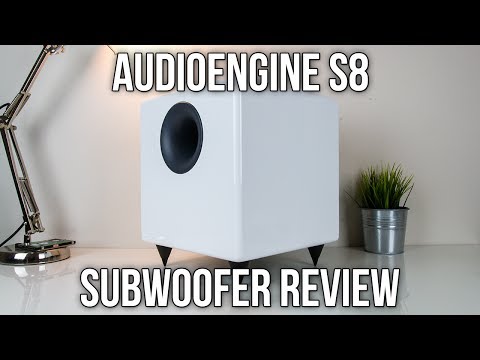 Audioengine S8 Subwoofer Review - So Much Bass!Jarrod'sTech


