-
LatestThe best Speaker of 2026
-
 Ultimate Ears Megaboom 4 Rugged 360-degree Bluetooth sound for outdoor gatherings
-
 Ultimate Ears Boom 4 Rugged 360-degree portable sound for gatherings anywhere.
-
 Ultimate Ears Wonderboom 4 Rugged, compact Bluetooth sound for everyday outdoor adventures.
-
 Turtlebox Ranger Rugged, loud portable speaker built for outdoor adventures.
-
 House of Marley Get Together 3 Portable speaker with warm sound and sustainable materials
-
 Turtlebox Original Gen 3 Rugged, powerful outdoor sound built for all-day adventures.
-
-
LatestThe best Speaker of 2026
-
 Onkyo GX-10DB Compact powered desktop speakers with versatile everyday connectivity
-
 Onkyo GX-30ARC Versatile powered stereo speakers for desks and TVs
-
 Audioengine HD6 Rich, flexible stereo sound without a separate amplifier.
-
 Mackie CR8BT Large, bass-rich desktop speakers for studios, gaming, and everyday listening.
-
 Mackie CR5BT Versatile Bluetooth monitors for music, work, and production.
-
 KEF LSX II LT Compact powered speakers with streaming and HDMI ARC
-
-
LatestThe best Speaker of 2026
-
 Yamaha NS-F 51 Smooth, affordable floorstanders for music and movie nights
-
 Q Acoustics 5040 Floorstanders deliver clear vocals, controlled bass, spacious sound.
-
 Q Acoustics 3050i Hifi Warm, room-filling floorstanders for music and movie nights.
-
 Q Acoustics M40 Room-filling stereo sound with simple all-in-one connectivity.
-
 Polk Audio T50 Warm, affordable towers for music and home theater
-
 KEF Q550 Slim towers, clear vocals, spacious imaging, controlled bass.
-
-
LatestThe best Speaker of 2026
-
 Logitech Z207 2.0 Compact Bluetooth desktop speakers for clear everyday audio
-
 Edifier G2000 Compact gaming speakers with connectivity and RGB lighting
-
 Edifier R1855DB Fuller desktop sound with flexible wired and wireless connectivity.
-
 Edifier R1280T Affordable powered speakers offer warm, clear everyday sound.
-
 Audioengine A2+ Compact powered speakers deliver clear, flexible desktop sound.
-
 Logitech Z313 Compact 2.1 desktop speakers deliver fuller everyday audio.
-
-
LatestThe best Headphone of 2026
-
 Sony 1000X THE COLLEXION Zwart Foldable noise-cancelling headphones with rich sound and comfort
-
 Bose QuietComfort Ultra Headphones (Gen 2) Premium travel audio: immersive sound, comfort, powerful cancellation.
-
 Sony WH-1000XM6 Premium noise-cancelling headphones for travel, work, and comfort.
-
 JBL Tour One M3 Smart TX Premium noise-cancelling headphones with a travel-ready audio transmitter
-
 Cleer Audio Enduro ANC Affordable headphones with cancellation and marathon battery life
-
 Cleer Audio Alpha Detailed sound, strong noise cancellation, and all-day battery life.
-
-
LatestThe best Headphone of 2026
-
 Jabra Evolve 20SE UC Stereo Lightweight wired headset for clear everyday office calls
-
 Jabra Evolve 40 UC Wired headset delivers clear calls and convenient controls
-
 Philips TAH4205 Compact wireless headphones with punchy bass and quick charging
-
 Jabra Evolve2 65 Flex MS Foldable Teams headset for clear, portable hybrid-work calls.
-
 JBL JR310BT Kid-friendly wireless audio with an 85 dB limit
-
 Sony WH-CH520 Lightweight headphones, long battery life, effortless pairing.
-
-
LatestThe best Headphone of 2026
-
 Cleer Audio ARC 3 Open-ear comfort, rich features, everyday awareness.
-
 Samsung Buds FE Affordable everyday earbuds with ANC and a secure fit
-
 Sennheiser Momentum Sport Workout earbuds with heart-rate tracking and punchy sound
-
 Sony LinkBuds Fit Comfortable, secure earbuds for commutes and workouts.
-
 JBL Live Buds 3 Feature-rich earbuds with touchscreen case and customizable sound.
-
 Bowers & Wilkins Pi8 Premium earbuds offer detailed sound and travel-ready versatility
-
-
LatestThe best Headphone of 2026
-
 HyperX Cloud Alpha Wireless A long-lasting gaming headset built for marathon sessions.
-
 Razer Kraken V4 Feature-rich wireless gaming headset for multi-device play
-
 Turtle Beach Stealth 700 GEN3 Flexible gaming audio, Bluetooth, and exceptional battery endurance.
-
 Logitech G535 Lightspeed Wireless Lightweight comfort and reliable PC, PlayStation gaming audio
-
 Corsair Void RGB Elite Wireless Comfortable PC gaming headset with punchy audio
-
 Corsair HS80 RGB Wireless Comfortable gaming headset with clear audio and microphone
-
-
LatestThe best Home audio system of 2026
-
 Sony Bravia Theatre Bar 8 Premium Dolby Atmos sound with a tidy, expandable single-bar design.
-
 TCL S45H 2.0 Compact budget soundbar boosts dialogue with virtual surround.
-
 TCL S55H 2.1 Compact soundbar delivers clearer dialogue, cinematic sound, and wireless bass.
-
 TCL Q85H Immersive Dolby Atmos cinema sound, without receiver hassle.
-
 Harman Kardon Enchant 1100 Premium soundbar brings immersive cinema and clear dialogue
-
 Harman Kardon Enchant 900 Compact Atmos soundbar with clear dialogue and spacious sound.
-
-
LatestThe best Home audio system of 2026
-
 Google TV Streamer 4K Polished streaming and smart-home hub for everyday viewing
-
 Apple TV 4K (Wi-Fi) Premium streaming with polished menus and seamless integration.
-
 Nvidia Shield TV Pro Versatile 4K streamer for local media and gaming
-
-
LatestThe best Home audio system of 2026
-
 Pioneer VSX-LX305 Immersive nine-channel home theater with Dirac Live correction.
-
 Denon AVC-X3800H Expandable home theater power with Atmos and gaming connectivity.
-
 Pioneer VSX-LX505 Flexible Atmos receiver with Dirac Live, gaming support
-
 JBL MA510 Straightforward 5.2-channel home theater with modern gaming connectivity.
-
 JBL MA310 Straightforward 5.2-channel surround sound for 4K home theaters
-
 Denon AVR-S970H Flexible 7.2-channel receiver for immersive, modern home theaters
-
-
LatestThe best Home audio system of 2026
-
 Denon PMA-1700NE Versatile stereo amp for vinyl and digital music
-
 Pioneer A-40AE Balanced stereo sound, versatile analog and digital connections.
-
 Audiolab 6000A Versatile stereo amplification with clear sound and connectivity
-
 Denon PMA-900HNE Streaming stereo amplifier for vinyl, TV, and playlists
-
 LEAK Stereo 130 Versatile, stylish amplifier for vinyl, digital audio, and Bluetooth.
-
 Yamaha A-S701 Powerful, versatile stereo amplification for traditional home hi-fi.
-
-
LatestThe best Home audio system of 2026
-
 Mackie CR8S Compact studio subwoofer adds controlled low-end depth to nearfield monitors.
-
 Audioengine S8 Compact powered subwoofer adds balanced bass to small stereo setups.
-
 KEF Kube 12 MIE Active Subwoofer Controlled, room-filling bass for music and cinematic impact.
-
 Klipsch R-12SW Powerful, room-filling bass for movies and music.
-
 Klipsch R-121SW Powerful, room-filling bass for movies and music.
-
 Bose Bass Module 500 Compact subwoofer adds fuller sound to compatible soundbars.
-
Audiolab 6000A review
Audiolab 6000A review: explore its clear, balanced sound, 50W power, built-in DAC, Bluetooth aptX and phono stage for a versatile hi-fi system.
check best price


 2024-11-12
- By Tamar Pluimgraaf
Summary / TL;DR

The Audiolab 6000A is a 50-watt-per-channel integrated stereo amplifier with a built-in DAC, Bluetooth aptX, an MM phono input, and a range of analogue and digital connections. It can connect to sources such as a turntable, TV, CD player or phone, but lacks USB, HDMI ARC and built-in network streaming. Its sound is described as clear and balanced, with controlled bass; its power should suit many typical home setups, though less efficient speakers or larger rooms may need a stronger amplifier. Pre-out and power-amp connections allow for system expansion. At around US$999 list price, its value depends on whether its built-in features are useful to the buyer.
Where to buy
 Best offers of the Audiolab 6000A at Amazon.com
Want to help us grow? When you purchase items through the above links we receive a small commission.
Introduction
The Audiolab 6000A integrated amplifier is a practical choice for a two-channel hi-fi system that needs to handle more than just a turntable or CD player. It brings traditional stereo amplification together with digital and wireless listening options, making it a good fit for a living room where a laptop, TV, and record player might all take turns as the source.
That flexibility is the appeal: you can build a straightforward setup around a pair of bookshelf speakers, then add other sources without filling the rack with separate boxes. Audiolab rates it at 50 watts per channel into 8 ohms, enough for many typical home listening setups, though room size and speaker sensitivity still matter. It isn’t a specialist powerhouse; it’s a well-equipped stereo amplifier for everyday music listening, with a reputation that has made it a common shortlist option in its price bracket.
Related reviews
-

-
 Pioneer A-40AEAmplifiers
-

Design and Build Quality
The Audiolab 6000A has a restrained, full-width design that looks at home on a hi-fi rack without drawing attention away from the rest of the system. Its 445 mm-wide chassis matches the size of many separate CD players and streamers, so stacking components is straightforward. At 65.5 mm tall, it also slips onto shelves with limited vertical clearance, though it still needs room around it for ventilation.
The front panel is aluminium, and the metal controls give the amplifier a more solid feel than the lightweight plastic knobs found on some budget stereo amps. The large volume dial turns smoothly, making small adjustments easy; that’s handy when you’re listening quietly and don’t want to jump past your preferred level. The buttons are closely grouped, so the front can look a little busy at first, but their clear layout keeps the overall appearance tidy.
Compact, sturdy construction
At 7.8 kg, it feels substantial without being awkward to lift onto a shelf. The steel chassis helps the unit feel firm in everyday use, while its slim profile gives it a cleaner look than many deeper, bulkier amplifiers. Black and silver finishes are available, both with a simple, understated look that should suit most living rooms.
One practical detail: the case is relatively shallow, but allow extra space behind it for cables rather than pushing it hard against a wall. That keeps the installation neat and avoids putting strain on plugs. Overall, the build is polished and reassuring for a mid-priced integrated amplifier, even if it doesn’t have the heavy, luxury feel of more expensive hi-fi models.
Features and Connectivity
The Audiolab 6000A covers the connections most stereo systems need, with a useful mix of analogue, digital and wireless inputs. Its ESS Sabre ES9018K2M DAC handles the four digital inputs: two optical and two coaxial. That makes it easy to connect a TV, CD transport, streamer or game console, though there’s no HDMI ARC or USB input for a computer.
| Connection | What it’s useful for |
|---|---|
| 2 optical, 2 coaxial digital inputs | TVs, CD players and digital streamers |
| 3 line-level analogue inputs | Sources such as a tape deck or standalone DAC |
| MM phono input | A turntable with a moving-magnet cartridge |
| Bluetooth with aptX | Wireless playback from a phone or tablet |
| Pre-out and power-amp input | Adding a subwoofer or using an external power amplifier |
| 6.3 mm headphone output | Listening with standard wired headphones |
The MM phono stage means a compatible turntable can connect directly, without a separate phono preamp. For a moving-coil cartridge, you’ll need an external phono stage instead. Bluetooth aptX is handy for casual listening, but it doesn’t replace a wired digital connection when you want the most consistent playback quality.
The pre-out and power-amp input add flexibility beyond a basic integrated amplifier. For example, you can connect a powered subwoofer through the pre-out, or later use the unit as a preamplifier with a separate power amp. These options make it easier to change a system over time without replacing every component.
What's in the Box
The standard retail package is fairly simple: the amplifier, a remote handset, a mains power cable and printed documentation. The cable’s plug type can vary by country, so check the version supplied by your retailer if you’re buying internationally.
- Remote control: Lets you handle everyday functions from your listening seat. Check whether batteries are included, as this can vary by package.
- Mains cable: Connects the unit to a wall outlet.
- User documentation: Covers basic connections and operation, with warranty paperwork usually included.
There are no speaker cables or source-device leads in the box. For example, connecting a turntable with a separate phono stage or adding a CD player will require the appropriate cables, so it’s worth checking what you already own before setup day.
Setup and Ease of Use
Setting up the Audiolab 6000A is straightforward, even if you haven’t used a separate integrated amplifier before. Place it on a firm, open shelf, connect your speakers with the amplifier switched off, and match the red and black terminals at both ends of each cable. Keeping the polarity consistent helps preserve a stable stereo image.
First-time setup
The front-panel display and controls make basic operation easy to follow: select a source, then adjust the volume. On a first listen, start with the volume low, especially if your source device has its own output-level control. This avoids an abrupt blast of sound when you switch on or change inputs.
Allow room around the case for ventilation rather than stacking another component directly on top. That’s a practical detail in a crowded TV cabinet: the amp can run warm during longer listening sessions, particularly when driving speakers at higher levels.
Everyday operation
The supplied remote is handy for changing inputs and making small volume adjustments from the sofa. Its buttons are fairly compact, so it may take a little time to learn by feel; the front-panel controls remain simple to use if you’re standing nearby. If you’re connecting a turntable, check that it has a built-in phono stage or use a separate phono preamp—the amp does not provide a dedicated phono input.
Sound Quality and Performance
With 50 watts per channel into 8 ohms (or 75 watts into 4 ohms), the Audiolab 6000A has enough clean power for most bookshelf speakers and many easy-to-drive floorstanders. Its presentation is clear and balanced rather than deliberately warm or bass-heavy. That makes it a good match for systems where you want to hear the character of your speakers and recordings, not have the amplifier put its own strong stamp on them.
Clear detail, controlled bass
On a well-recorded vocal track, voices sit neatly in the mix, with enough texture to distinguish a breath or a rough edge without making either sound exaggerated. Piano notes have a crisp start and a natural decay; cymbals come through cleanly, though the amp won’t soften a bright recording for you. Pair it with lively speakers and sharp-sounding recordings can feel a little forward, so matching components matters.
The low end is tidy and well defined. A bass guitar line stays easy to follow when the arrangement gets busy, and kick drums have a firm attack rather than a loose, lingering thump. This helps with everything from acoustic music to dense rock mixes. Listeners who want a heavy, room-shaking bottom end may prefer speakers that provide more of that weight themselves.
Composed at everyday listening levels
At moderate volume, the amp keeps instruments distinct instead of flattening a crowded mix into one mass of sound. Turn it up for a lively track and it remains composed in a small or medium-sized room, with satisfying punch on drum hits. It is less suited to pushing inefficient speakers to high levels across a large room; its power rating is respectable, but it is not a substitute for a high-powered amplifier with demanding speakers.
Its built-in DAC also delivers a clean, detailed sound from digital sources. The result is especially appealing with well-recorded streaming and CD-quality music, where subtle backing parts and changes in a singer’s phrasing are easy to pick out. Overall, the 6000A favours clarity, controlled bass and an even tonal balance over warmth or sheer force—a sensible sound for long listening sessions and a wide range of music.
Competitor comparison
The Audiolab 6000A sits between stripped-back analogue amplifiers and more feature-packed stereo systems. Its appeal is the mix: 50 watts per channel into 8 ohms, a built-in DAC, Bluetooth aptX, and a moving-magnet phono input. That makes it a more flexible choice than some similarly priced amps, though not necessarily the best fit if you want maximum power or a built-in radio.
How it compares with popular alternatives
| Amplifier | What it offers | Where the Audiolab has an edge |
|---|---|---|
| Marantz PM6007 | 45 watts per channel, digital inputs, a phono stage and a subwoofer output | Bluetooth aptX is built in, so you can stream from a phone without adding a separate receiver. |
| Yamaha A-S501 | 85 watts per channel, optical and coaxial inputs, and a moving-magnet phono input | It includes Bluetooth, while the Yamaha offers more rated power for listeners who need extra headroom. |
| NAD C 316BEE V2 | A straightforward analogue design with 40 watts per channel and a phono input | Its digital inputs and Bluetooth make it easier to connect a TV, CD transport or phone without extra boxes. |
Against the Marantz, the choice often comes down to convenience and system matching. Both suit a compact two-channel setup with a turntable and digital sources, but the Audiolab’s Bluetooth can be handy for quick playlists when you don’t want to switch on a streamer. The PM6007, meanwhile, has a subwoofer output, which can make adding bass support simpler in a small room.
The Yamaha is the stronger candidate if you have less efficient speakers or listen in a larger space: its higher power rating gives it more potential headroom. The Audiolab counters with a useful spread of connections and a power-amp mode for use with a separate preamp or home-cinema receiver. That flexibility matters if your system may grow beyond a basic integrated amplifier and a pair of speakers.
Compared with the simpler NAD, the 6000A costs more for its extra digital and wireless options. Those features are genuinely useful if a TV or phone is part of your regular listening setup; they’re less compelling if you only play records and use analogue sources. In short, it’s a strong stereo amplifier with DAC and Bluetooth, while the Yamaha is the higher-power pick and the Marantz offers a practical alternative with a subwoofer connection.
Value for Money
The Audiolab 6000A makes its strongest value case by combining several jobs in one chassis. Its DAC, phono stage and headphone output can save you from buying separate boxes, power supplies and cables just to get a basic hi-fi system going. For example, someone moving from a turntable-and-powered-speaker setup to passive speakers can add the amp without also budgeting for a standalone phono preamp and DAC.
At around US$999 at list price—with actual prices varying by retailer and sale—it sits above basic stereo amplifiers, but the extra spend buys useful flexibility rather than a long list of rarely used features. It’s a sensible long-term purchase if you already own a source or plan to add one later, and a good fit for a living room system that may grow over time.
Where the value depends on your system
The calculation is less attractive if you need network streaming built in: you’ll have to add a streamer, which raises the total cost. Likewise, buyers with power-hungry speakers may need a more powerful amplifier rather than paying for features they won’t use. For a typical two-channel setup, though, the 6000A offers a practical balance of integrated amplifier value, useful connections and room to upgrade without forcing an immediate spend on extra components.
Conclusion
The Audiolab 6000A makes a strong case as a stereo integrated amplifier for a practical, long-term hi-fi system. Its 50 watts per channel into 8 ohms is a sensible match for many bookshelf and floorstanding speakers in a typical living room, rather than a promise of room-shaking volume. Pair it with a turntable, CD player or TV, and it can anchor a system without needing a separate DAC and preamp.
Its main limitation is that it isn’t a network streamer, so listening to services such as Spotify or Qobuz means adding a streaming device. That’s a fair trade-off for buyers who already have sources, but a point to budget for if you want an all-in-one setup. For anyone seeking a well-built integrated amplifier with flexible everyday use, the 6000A remains an appealing buy—especially when its price leaves room for good speakers and proper stands.
Pros & cons
Pros
- Useful digital inputs and built-in DAC
- Bluetooth aptX for wireless playback
- Clear, balanced sound with controlled bass
- Sturdy build and practical connections
- 50W suits many typical home setups
Cons
- No USB input or HDMI ARC
- No built-in network streaming
- Limited power for demanding speakers
- Can sound forward with bright speakers
Frequently Asked Questions
The Audiolab 6000A offers a range of features including a built-in DAC for digital sources, a phono stage for vinyl playback, Bluetooth connectivity, and a dedicated headphone amplifier. It also supports multiple operational modes, allowing it to function as an integrated amplifier, preamplifier, or power amplifier.
The Audiolab 6000A delivers 50 watts per channel into 8 ohms and 75 watts per channel into 4 ohms, making it suitable for a variety of speaker configurations.
The Audiolab 6000A uses the ES9018 Sabre32 Reference DAC chip, which provides high-quality digital-to-analog conversion with low noise and high dynamic range.
Yes, the Audiolab 6000A supports wireless connectivity via Bluetooth, allowing you to stream music from portable devices.
Yes, the Audiolab 6000A can be used in different operational modes, allowing it to function as a standalone preamplifier or power amplifier, in addition to its integrated mode.
The Audiolab 6000A has a maximum current delivery of 9 amps into difficult loads, ensuring it can handle demanding speaker setups.
Yes, the Audiolab 6000A includes a built-in phono stage for moving-magnet cartridges, allowing direct connection of a turntable.
The Audiolab 6000A supports two optical and two coaxial digital inputs, allowing connection of various digital sources.
Yes, the Audiolab 6000A includes a dedicated headphone amplifier, providing high-quality sound for private listening.
The Audiolab 6000A's preamp section is designed to be simple, with careful physical layout to protect it from noise interference, ensuring signal purity.
Important
Before buying any product, check all details of this product on the website or in the store where you purchase it. Aspects and specifications mentioned in the text above might differ.

Written by Tamar Pluimgraaf
Tamar Pluimgraaf is a renowned expert in the world of audio, with over seven years of experience that has made him a trusted authority among audiophiles and music enthusiasts globally. His deep understanding of sound quality and technical prowess provides invaluable insights for those looking to enhance their audio experiences. Born in Tilburg, The Netherlands, Tamar's journey into the realm of music and technology began early, leading him to pursue a degree in Audio Engineering at the SAE Institute in Amsterdam. This solid educational foundation allows him to critically assess and review the latest audio products on the market.
Beyond his professional endeavors, Tamar is passionate about music in all its forms. He is an avid vinyl collector and enjoys producing his own tracks, combining electronic and acoustic elements to craft unique sounds. His active participation in online audio forums and contributions to tech magazines and review websites have cemented his reputation as a dedicated and insightful reviewer. Tamar's ability to simplify complex audio concepts and his commitment to honest reviews have garnered him a loyal following, keeping him at the forefront of audio innovation as technology evolves.
Read more about TamarVideos
-
-

-
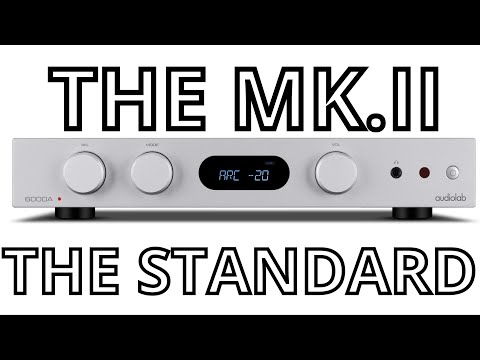
 Audiolab 6000A Mk II Integrated Amplifier ReviewTHE ABSOLUTE SOUND
-
 6000A MKIIAudiolab Official
-
 THE COMPLETE AMPLIFIER ! Audiolab 6000A Mk2 ReviewA British Audiophile
-
 A for AWESOME! Audiolab 6000A Play Review - AUDIOLAB REVIEW!!Andrew Robinson
More related reviews
-
 LEAK Stereo 130Amplifiers
-

-
