-
LatestThe best Speaker of 2026
-
 Ultimate Ears Megaboom 4 Rugged 360-degree Bluetooth sound for outdoor gatherings
-
 Ultimate Ears Boom 4 Rugged 360-degree portable sound for gatherings anywhere.
-
 Ultimate Ears Wonderboom 4 Rugged, compact Bluetooth sound for everyday outdoor adventures.
-
 Turtlebox Ranger Rugged, loud portable speaker built for outdoor adventures.
-
 House of Marley Get Together 3 Portable speaker with warm sound and sustainable materials
-
 Turtlebox Original Gen 3 Rugged, powerful outdoor sound built for all-day adventures.
-
-
LatestThe best Speaker of 2026
-
 Onkyo GX-10DB Compact powered desktop speakers with versatile everyday connectivity
-
 Onkyo GX-30ARC Versatile powered stereo speakers for desks and TVs
-
 Audioengine HD6 Rich, flexible stereo sound without a separate amplifier.
-
 Mackie CR8BT Large, bass-rich desktop speakers for studios, gaming, and everyday listening.
-
 Mackie CR5BT Versatile Bluetooth monitors for music, work, and production.
-
 KEF LSX II LT Compact powered speakers with streaming and HDMI ARC
-
-
LatestThe best Speaker of 2026
-
 Yamaha NS-F 51 Smooth, affordable floorstanders for music and movie nights
-
 Q Acoustics 5040 Floorstanders deliver clear vocals, controlled bass, spacious sound.
-
 Q Acoustics 3050i Hifi Warm, room-filling floorstanders for music and movie nights.
-
 Q Acoustics M40 Room-filling stereo sound with simple all-in-one connectivity.
-
 Polk Audio T50 Warm, affordable towers for music and home theater
-
 KEF Q550 Slim towers, clear vocals, spacious imaging, controlled bass.
-
-
LatestThe best Speaker of 2026
-
 Logitech Z207 2.0 Compact Bluetooth desktop speakers for clear everyday audio
-
 Edifier G2000 Compact gaming speakers with connectivity and RGB lighting
-
 Edifier R1855DB Fuller desktop sound with flexible wired and wireless connectivity.
-
 Edifier R1280T Affordable powered speakers offer warm, clear everyday sound.
-
 Audioengine A2+ Compact powered speakers deliver clear, flexible desktop sound.
-
 Logitech Z313 Compact 2.1 desktop speakers deliver fuller everyday audio.
-
-
LatestThe best Headphone of 2026
-
 Sony 1000X THE COLLEXION Zwart Foldable noise-cancelling headphones with rich sound and comfort
-
 Bose QuietComfort Ultra Headphones (Gen 2) Premium travel audio: immersive sound, comfort, powerful cancellation.
-
 Sony WH-1000XM6 Premium noise-cancelling headphones for travel, work, and comfort.
-
 JBL Tour One M3 Smart TX Premium noise-cancelling headphones with a travel-ready audio transmitter
-
 Cleer Audio Enduro ANC Affordable headphones with cancellation and marathon battery life
-
 Cleer Audio Alpha Detailed sound, strong noise cancellation, and all-day battery life.
-
-
LatestThe best Headphone of 2026
-
 Jabra Evolve 20SE UC Stereo Lightweight wired headset for clear everyday office calls
-
 Jabra Evolve 40 UC Wired headset delivers clear calls and convenient controls
-
 Philips TAH4205 Compact wireless headphones with punchy bass and quick charging
-
 Jabra Evolve2 65 Flex MS Foldable Teams headset for clear, portable hybrid-work calls.
-
 JBL JR310BT Kid-friendly wireless audio with an 85 dB limit
-
 Sony WH-CH520 Lightweight headphones, long battery life, effortless pairing.
-
-
LatestThe best Headphone of 2026
-
 Cleer Audio ARC 3 Open-ear comfort, rich features, everyday awareness.
-
 Samsung Buds FE Affordable everyday earbuds with ANC and a secure fit
-
 Sennheiser Momentum Sport Workout earbuds with heart-rate tracking and punchy sound
-
 Sony LinkBuds Fit Comfortable, secure earbuds for commutes and workouts.
-
 JBL Live Buds 3 Feature-rich earbuds with touchscreen case and customizable sound.
-
 Bowers & Wilkins Pi8 Premium earbuds offer detailed sound and travel-ready versatility
-
-
LatestThe best Headphone of 2026
-
 HyperX Cloud Alpha Wireless A long-lasting gaming headset built for marathon sessions.
-
 Razer Kraken V4 Feature-rich wireless gaming headset for multi-device play
-
 Turtle Beach Stealth 700 GEN3 Flexible gaming audio, Bluetooth, and exceptional battery endurance.
-
 Logitech G535 Lightspeed Wireless Lightweight comfort and reliable PC, PlayStation gaming audio
-
 Corsair Void RGB Elite Wireless Comfortable PC gaming headset with punchy audio
-
 Corsair HS80 RGB Wireless Comfortable gaming headset with clear audio and microphone
-
-
LatestThe best Home audio system of 2026
-
 Sony Bravia Theatre Bar 8 Premium Dolby Atmos sound with a tidy, expandable single-bar design.
-
 TCL S45H 2.0 Compact budget soundbar boosts dialogue with virtual surround.
-
 TCL S55H 2.1 Compact soundbar delivers clearer dialogue, cinematic sound, and wireless bass.
-
 TCL Q85H Immersive Dolby Atmos cinema sound, without receiver hassle.
-
 Harman Kardon Enchant 1100 Premium soundbar brings immersive cinema and clear dialogue
-
 Harman Kardon Enchant 900 Compact Atmos soundbar with clear dialogue and spacious sound.
-
-
LatestThe best Home audio system of 2026
-
 Google TV Streamer 4K Polished streaming and smart-home hub for everyday viewing
-
 Apple TV 4K (Wi-Fi) Premium streaming with polished menus and seamless integration.
-
 Nvidia Shield TV Pro Versatile 4K streamer for local media and gaming
-
-
LatestThe best Home audio system of 2026
-
 Pioneer VSX-LX305 Immersive nine-channel home theater with Dirac Live correction.
-
 Denon AVC-X3800H Expandable home theater power with Atmos and gaming connectivity.
-
 Pioneer VSX-LX505 Flexible Atmos receiver with Dirac Live, gaming support
-
 JBL MA510 Straightforward 5.2-channel home theater with modern gaming connectivity.
-
 JBL MA310 Straightforward 5.2-channel surround sound for 4K home theaters
-
 Denon AVR-S970H Flexible 7.2-channel receiver for immersive, modern home theaters
-
-
LatestThe best Home audio system of 2026
-
 Denon PMA-1700NE Versatile stereo amp for vinyl and digital music
-
 Pioneer A-40AE Balanced stereo sound, versatile analog and digital connections.
-
 Audiolab 6000A Versatile stereo amplification with clear sound and connectivity
-
 Denon PMA-900HNE Streaming stereo amplifier for vinyl, TV, and playlists
-
 LEAK Stereo 130 Versatile, stylish amplifier for vinyl, digital audio, and Bluetooth.
-
 Yamaha A-S701 Powerful, versatile stereo amplification for traditional home hi-fi.
-
-
LatestThe best Home audio system of 2026
-
 Mackie CR8S Compact studio subwoofer adds controlled low-end depth to nearfield monitors.
-
 Audioengine S8 Compact powered subwoofer adds balanced bass to small stereo setups.
-
 KEF Kube 12 MIE Active Subwoofer Controlled, room-filling bass for music and cinematic impact.
-
 Klipsch R-12SW Powerful, room-filling bass for movies and music.
-
 Klipsch R-121SW Powerful, room-filling bass for movies and music.
-
 Bose Bass Module 500 Compact subwoofer adds fuller sound to compatible soundbars.
-
Q Acoustics M40 review
Q Acoustics M40 review: Explore room-filling stereo sound, HDMI ARC, Bluetooth and the easy all-in-one setup for TV and music.
check best price


 2025-01-24
- By Marije Strooberg
Summary / TL;DR

The Q Acoustics M40 is an active floorstanding speaker pair with built-in amplification, HDMI ARC, optical, USB, analogue inputs and Bluetooth aptX HD. It can connect to a TV, computer, turntable or mobile device without a separate amplifier, though it has no Wi-Fi streaming or app control. Setup requires mains power for the active speaker and a cable linking the pair.
Sound is spacious, with clear vocals, a natural midrange and generous bass suited to music and TV. Bass may become too full near walls, and very deep frequencies lack the impact of a subwoofer. The cabinets are relatively slim but still need floor space. The M40 is best suited to listeners seeking a straightforward living-room stereo system; compact active speakers may be a better fit where space or network streaming is a priority.
If you like this review, you might also like our review on the Q Acoustics 3020c or Q Acoustics M20 or Q Acoustics 5040.
Where to buy
 Best offers of the Q Acoustics M40 at Amazon.com
Want to help us grow? When you purchase items through the above links we receive a small commission.
Introduction
The Q Acoustics M40 is a pair of active floorstanding speakers designed for people who want proper stereo sound without adding a separate amplifier to the living room. Each speaker has its own amplification, so the setup can stay simpler than a traditional hi-fi system while still offering a left-and-right speaker layout that a soundbar can’t quite match.
That makes them a practical fit for a TV-and-music setup: picture a film night one evening, then a playlist playing through Bluetooth the next, all without swapping cables or switching on a stack of components. They also suit listeners moving up from a small wireless speaker but short on space for a receiver and separate bookshelf speakers. Just bear in mind that floorstanding speakers still need room on the floor and a nearby power socket for each one.
With Bluetooth and wired connections on board, the M40 aims to bridge everyday convenience and a more substantial stereo hi-fi system. This review looks at whether that all-in-one approach delivers the sound and usability to justify giving a pair of active speakers a place in your room.
Related reviews


Design and Build Quality
The Q Acoustics M40 has the look of a slim pair of traditional floorstanding speakers, rather than two bulky boxes of electronics. Each cabinet measures about 740 × 250 × 280 mm, so it can sit beside a TV stand or sofa without taking over the room. At roughly 12 kg per speaker, they’re manageable to move into position, though you’ll want a clear path if you’re carrying them upstairs.
A tidy, understated cabinet
The finish options—Satin Black, Satin White and Claro Walnut—give the speakers a more furniture-friendly look than many all-black active models. The front panel holds a 22 mm tweeter above two 125 mm mid/bass drivers, with a removable grille for a plainer appearance. Leave the grille off and the driver layout becomes a more prominent part of the room; put it on and the front looks much quieter, which may suit a shared living space better.
The cabinets feel solid for their size, and their relatively narrow fronts make placement beside a bookcase or media unit straightforward. Their depth is worth checking before you buy, though: at 280 mm, they’ll project beyond some shallow TV stands. Overall, the M40’s slim floorstanding speaker design balances a neat footprint with enough visual presence to look intentional rather than like a pair of oversized desktop speakers.
What's in the Box
The package gives you the main items needed to get the pair ready: the active and passive speakers, a speaker link cable, a power cable, a remote control and the printed setup guide. The link cable connects the two cabinets, so you don’t need to buy a separate amplifier or speaker wire just to make the pair work.
- Two speaker cabinets: one active speaker and one passive speaker
- Speaker connection cable: links the passive cabinet to the active one
- Power cable: supplies power to the active speaker
- Remote control: for basic control from your listening position
- Printed guide: covers the initial setup
The speaker link cable is worth checking before you choose where to place them: the passive speaker needs to sit within reach of the active one. For a typical setup with the speakers either side of a TV stand, that’s easy to manage; a wide room may call for more careful placement. The box is substantial, too, so unpacking the cabinets near their final spots saves you carrying them around unnecessarily.
Setup and Connectivity
Setup is straightforward, but the speaker placement matters: the Q Acoustics M40 is a powered stereo system, with the amplifier and connections housed in one cabinet. Run the supplied speaker cable between the two speakers, connect the active one to mains power, and you’re ready to add your sources. Keep the active speaker near a power socket and within reach of your TV or other wired gear; the link cable also sets a limit on how far apart the speakers can sit.
Connecting a TV, computer or turntable
For a television, use the HDMI ARC input if your TV has an ARC-labelled HDMI port. It keeps the connection simple and lets you adjust speaker volume with the TV remote on compatible sets. If your TV lacks ARC, the optical input is a useful fallback. Check the TV’s audio settings if you get silence or an unstable connection: setting digital audio output to PCM often solves compatibility issues with stereo speakers.
The rear panel also gives you a USB input for a computer, plus RCA and 3.5mm analogue inputs for other audio sources. That makes it easy to build a practical desk setup—connect a laptop by USB, for example, and switch to a wired music player without re-pairing anything. There’s also a subwoofer output if you later want to add a separate bass unit.
| Source | Connection to use |
|---|---|
| TV with ARC | HDMI ARC |
| TV without ARC | Optical |
| Computer | USB |
| Phone or tablet | Bluetooth or 3.5mm |
| Turntable or other analogue source | RCA, subject to the source’s output requirements |
Bluetooth and everyday switching
Bluetooth 5.0 with aptX HD provides a tidy wireless option for phones and tablets, while remaining compatible with devices that use other supported Bluetooth codecs. Pairing is handy for casual listening, though a wired USB or digital connection is the better choice if you want to avoid wireless interruptions during a film or long listening session. The range will depend on walls and other obstacles, so placing your phone in another room may cause dropouts.
There’s no Wi-Fi or network streaming, so music services need to reach the speakers through a connected device, usually over Bluetooth. In return, the range of physical inputs makes the system easy to fit into a living room or home office without adding a separate amplifier.
Features and Ease of Use
The Q Acoustics M40 keeps everyday use straightforward: choose a source, set the volume and get on with your listening. Its HDMI ARC connection makes it a practical choice for TV audio, and it can often be controlled with the TV remote too, depending on the television’s settings. That’s handy when you’re switching between a show and music without juggling two remotes.
Useful features without an app to manage
For wireless listening, Bluetooth with aptX HD supports higher-quality playback from compatible phones, tablets and computers. Pairing is simple, and there’s no separate app or network setup to maintain. Just bear in mind that Bluetooth quality depends on the source device and the audio service you’re using.
A small remote covers the basics, including power, volume and input selection. The rear-panel placement EQ is more useful than it might sound: its settings let you adjust the bass response for free-standing placement, a position near a wall or a corner. For example, if the speakers have to sit beside a TV cabinet rather than well out into the room, the wall setting can help keep bass from becoming too heavy.
- HDMI ARC: a convenient option for connecting a television.
- aptX HD Bluetooth: wireless playback from compatible devices.
- Placement EQ: settings designed to suit different positions in a room.
- Physical remote: quick access to everyday controls without opening an app.
These features make the M40 easy to live with as a pair of powered floorstanding speakers for TV and music. The trade-off is that listeners who want app-based control or a more elaborate multiroom system won’t find those options here. For a simple all-in-one stereo setup, though, the controls are clear and the useful adjustments are easy to reach.
Sound Quality
The first thing you notice is the scale of the sound. These speakers can fill a living room without making vocals sound oversized or pushing every instrument to the front. On a well-recorded acoustic track, a singer sits clearly between the cabinets, while guitar strings keep their crisp edge rather than turning thin or splashy.
Balanced, detailed sound
The 22mm tweeter gives cymbals and vocal detail a clear, open quality. It brings out small touches—breath between phrases, the light rattle of a snare—without making bright recordings tiring at sensible listening levels. The midrange is a strong point too: dialogue, piano and guitars have enough body to sound natural, not just sharply outlined.
Bass has more weight than you might expect from a compact floorstanding design. A kick drum lands with a satisfying thump, and bass guitar lines are easy to follow rather than blending into a low-end rumble. The twin 125mm mid/bass drivers help give music a confident, full-bodied presentation. There’s useful depth for most pop, rock and film soundtracks, though very deep electronic bass won’t have the physical rumble of a large subwoofer.
Room-filling without losing composure
At low-to-moderate volume, the sound stays lively and voices remain easy to hear—handy for evening listening when you don’t want to turn things up. Raise the level and the M40 can deliver real punch, but bass can sound a little too full if the speakers sit close to a wall. A small change in position can help tighten it up.
Overall, the Q Acoustics M40 makes a good case for a stereo speaker system for music and TV: clear vocals, convincing scale and bass with genuine presence. Its low end is generous rather than ultra-tight, but the balance feels engaging across a broad mix of everyday listening.
Competitor comparison
The Q Acoustics M40 sits in a useful middle ground: it gives you the scale of a pair of floorstanding speakers without requiring a separate amplifier. That makes it a different proposition from compact active bookshelf speakers, even when the smaller models offer more streaming features.
| Model | Best suited to | Main trade-off |
|---|---|---|
| Q Acoustics M40 | Room-filling stereo with a built-in amp and TV connections | Takes up more floor space than bookshelf speakers |
| Klipsch The Fives | Listeners who want active bookshelf speakers with HDMI ARC and a phono input | Smaller cabinets generally offer less physical scale than floorstanders |
| KEF LSX II | Compact listening setups with network streaming and app-based control | Costs more and is designed for a smaller footprint |
How it compares with active bookshelf speakers
Against the Klipsch The Fives, the M40 is the more obvious choice if you want tall speakers on either side of a TV and don’t want to add a subwoofer straight away. The Fives are easier to fit on a desk or media unit, and their built-in phono stage suits a turntable with a standard moving-magnet cartridge. Both offer HDMI ARC, which lets a TV send audio to the speakers and usually keeps volume control simple. The deciding factor is often space: bookshelf speakers can sit on a cabinet, while floorstanders need a clear patch of floor and a little room around them.
The KEF LSX II takes a different approach. It’s a compact active system with network streaming and app control, so it makes more sense for someone who plays music from services over Wi-Fi and values a smaller setup. The M40 is less focused on that kind of connected streaming, but its taller cabinets and larger speaker format suit a living room where you want a more substantial stereo presentation. For example, in a narrow TV nook, the LSX II is easier to place; in a larger lounge where the speakers sit either side of a screen, the M40’s floorstanding design can be more practical than trying to find two sturdy stands.
Which one makes more sense?
Choose the M40 if you want active floorstanding speakers for TV and music without buying a separate amplifier, and you have the floor space to use them properly. Pick The Fives for a smaller, turntable-friendly setup, or the LSX II if Wi-Fi streaming and compact size matter more than cabinet scale. The M40 isn’t the most feature-rich option in this group, but its combination of floorstanding speakers, built-in amplification and HDMI ARC is a straightforward fit for a main living-room system.
Conclusion
The Q Acoustics M40 makes a strong case for a simple living-room hi-fi system: two slim floorstanding speakers, built-in amplification and plenty of ways to connect a TV, turntable or phone. You can skip the separate amp and still get a setup that feels more substantial than most soundbars, especially for music and films at sensible listening levels.
That all-in-one approach is its biggest selling point, but it also sets the limit. You can’t upgrade the amplifier separately, and the speakers take up more floor space than compact bookshelf models. For a small room, a good pair of powered desktop speakers may be easier to place; for a typical lounge where you want clear dialogue, full-bodied stereo music and fewer boxes, the M40 is a practical fit. Think of a weeknight film on the TV, then a quick switch to a phone playlist without changing the system around.
As active floorstanding speakers for a TV and music system, they’re a convincing choice for listeners who value convenience without giving up proper stereo sound. Just measure your room and check the available connections before buying. If those suit your setup, the M40 can serve as the main hi-fi system rather than another component waiting to be replaced.
Pros & cons
Pros
- Built-in amplification simplifies setup
- Clear, balanced and room-filling sound
- Full-bodied bass for music and films
- HDMI ARC and a wide range of inputs
- aptX HD Bluetooth and placement EQ
Cons
- Needs floor space and power nearby
- No Wi-Fi or network streaming
- Bass can sound heavy near walls
- Amplifier cannot be upgraded separately
Frequently Asked Questions
The Q Acoustics M40 HD features a 2-way reflex ported enclosure, two 125mm mid/bass drivers, a 22mm tweeter, and a peak power output of 2 x 100W. It supports Bluetooth 5.0 with aptX HD, and offers various inputs like RCA, 3.5mm, optical, and USB. The system is designed for high-resolution audio up to 24-bit/192kHz.
The Q Acoustics M40 is available in three finishes: Black, White, and Walnut.
To set up the Q Acoustics M40 HD for optimal sound quality, ensure the speakers are positioned correctly (free space, against a wall, or in a corner), and use the EQ switch accordingly. Connect the speakers using the provided cable and adjust settings via the remote control.
No, the Q Acoustics M40 does not support Wi-Fi connectivity. It offers Bluetooth 5.0 for wireless streaming.
The Q Acoustics M40 HD consumes less than 0.5 watts in standby mode and approximately 10 watts during typical use.
No, the grilles on the Q Acoustics M40 are fixed and cannot be removed. This design helps minimize sound dispersion interference and adds strength to the baffle.
The Q Acoustics M40 HD has a frequency response of 38 Hz to 22 kHz (-6dB).
To connect a subwoofer to the Q Acoustics M40 HD, use the sub-out phono connector on the primary speaker, which provides a maximum output of 1 V RMS.
The amplified speaker of the Q Acoustics M40 HD weighs 12.4 kg (27 lb 5 oz), while the passive speaker weighs 11.8 kg (26 lb).
Yes, you can use the Q Acoustics M40 HD with a turntable, provided the turntable has a built-in preamp. Connect the turntable to the phono inputs on the primary speaker.
Important
Before buying any product, check all details of this product on the website or in the store where you purchase it. Aspects and specifications mentioned in the text above might differ.

Written by Marije Strooberg
Marije Strooberg, based in Groningen, The Netherlands, is a renowned expert in audio product reviews, specializing in mobile, HiFi, and PC speakers. With nine years of experience, her insightful critiques are trusted by readers seeking informed purchasing decisions. Marije's self-taught background and passion for music and technology enable her to communicate complex audio concepts with clarity, making her a respected voice in the sound technology industry.
Her reviews are praised for their balance of technical detail and accessible language, often including product comparisons and practical advice. Beyond her professional work, Marije enjoys exploring new cultures and testing portable speakers in diverse environments, infusing her writing with personal experiences. Committed to sustainability, she also volunteers with local organizations to promote eco-friendly consumer habits and highlights environmentally responsible audio companies in her reviews.
Read more about MarijeWhere to buy
More Q Acoustics reviews
Videos
-
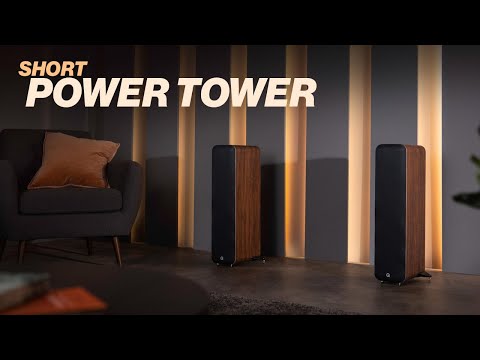 The New Q Acoustics m40Taps Das
-
 Q Acoustics NEW M40 Bluetooth Hi-Fi ExplainedFidelity Imports
-
 Q Acoustics M40 Sound DemoAudio Video Reviews
-

-
 Q Acoustics M40 : Tiny Towers, Massive MusicalityPeter Tyson Audio & Visual
-


