-
LatestThe best Speaker of 2026
-
 Ultimate Ears Megaboom 4 Rugged 360-degree Bluetooth sound for outdoor gatherings
-
 Ultimate Ears Boom 4 Rugged 360-degree portable sound for gatherings anywhere.
-
 Ultimate Ears Wonderboom 4 Rugged, compact Bluetooth sound for everyday outdoor adventures.
-
 Turtlebox Ranger Rugged, loud portable speaker built for outdoor adventures.
-
 House of Marley Get Together 3 Portable speaker with warm sound and sustainable materials
-
 Turtlebox Original Gen 3 Rugged, powerful outdoor sound built for all-day adventures.
-
-
LatestThe best Speaker of 2026
-
 Onkyo GX-10DB Compact powered desktop speakers with versatile everyday connectivity
-
 Onkyo GX-30ARC Versatile powered stereo speakers for desks and TVs
-
 Audioengine HD6 Rich, flexible stereo sound without a separate amplifier.
-
 Mackie CR8BT Large, bass-rich desktop speakers for studios, gaming, and everyday listening.
-
 Mackie CR5BT Versatile Bluetooth monitors for music, work, and production.
-
 KEF LSX II LT Compact powered speakers with streaming and HDMI ARC
-
-
LatestThe best Speaker of 2026
-
 Yamaha NS-F 51 Smooth, affordable floorstanders for music and movie nights
-
 Q Acoustics 5040 Floorstanders deliver clear vocals, controlled bass, spacious sound.
-
 Q Acoustics 3050i Hifi Warm, room-filling floorstanders for music and movie nights.
-
 Q Acoustics M40 Room-filling stereo sound with simple all-in-one connectivity.
-
 Polk Audio T50 Warm, affordable towers for music and home theater
-
 KEF Q550 Slim towers, clear vocals, spacious imaging, controlled bass.
-
-
LatestThe best Speaker of 2026
-
 Logitech Z207 2.0 Compact Bluetooth desktop speakers for clear everyday audio
-
 Edifier G2000 Compact gaming speakers with connectivity and RGB lighting
-
 Edifier R1855DB Fuller desktop sound with flexible wired and wireless connectivity.
-
 Edifier R1280T Affordable powered speakers offer warm, clear everyday sound.
-
 Audioengine A2+ Compact powered speakers deliver clear, flexible desktop sound.
-
 Logitech Z313 Compact 2.1 desktop speakers deliver fuller everyday audio.
-
-
LatestThe best Headphone of 2026
-
 Sony 1000X THE COLLEXION Zwart Foldable noise-cancelling headphones with rich sound and comfort
-
 Bose QuietComfort Ultra Headphones (Gen 2) Premium travel audio: immersive sound, comfort, powerful cancellation.
-
 Sony WH-1000XM6 Premium noise-cancelling headphones for travel, work, and comfort.
-
 JBL Tour One M3 Smart TX Premium noise-cancelling headphones with a travel-ready audio transmitter
-
 Cleer Audio Enduro ANC Affordable headphones with cancellation and marathon battery life
-
 Cleer Audio Alpha Detailed sound, strong noise cancellation, and all-day battery life.
-
-
LatestThe best Headphone of 2026
-
 Jabra Evolve 20SE UC Stereo Lightweight wired headset for clear everyday office calls
-
 Jabra Evolve 40 UC Wired headset delivers clear calls and convenient controls
-
 Philips TAH4205 Compact wireless headphones with punchy bass and quick charging
-
 Jabra Evolve2 65 Flex MS Foldable Teams headset for clear, portable hybrid-work calls.
-
 JBL JR310BT Kid-friendly wireless audio with an 85 dB limit
-
 Sony WH-CH520 Lightweight headphones, long battery life, effortless pairing.
-
-
LatestThe best Headphone of 2026
-
 Cleer Audio ARC 3 Open-ear comfort, rich features, everyday awareness.
-
 Samsung Buds FE Affordable everyday earbuds with ANC and a secure fit
-
 Sennheiser Momentum Sport Workout earbuds with heart-rate tracking and punchy sound
-
 Sony LinkBuds Fit Comfortable, secure earbuds for commutes and workouts.
-
 JBL Live Buds 3 Feature-rich earbuds with touchscreen case and customizable sound.
-
 Bowers & Wilkins Pi8 Premium earbuds offer detailed sound and travel-ready versatility
-
-
LatestThe best Headphone of 2026
-
 HyperX Cloud Alpha Wireless A long-lasting gaming headset built for marathon sessions.
-
 Razer Kraken V4 Feature-rich wireless gaming headset for multi-device play
-
 Turtle Beach Stealth 700 GEN3 Flexible gaming audio, Bluetooth, and exceptional battery endurance.
-
 Logitech G535 Lightspeed Wireless Lightweight comfort and reliable PC, PlayStation gaming audio
-
 Corsair Void RGB Elite Wireless Comfortable PC gaming headset with punchy audio
-
 Corsair HS80 RGB Wireless Comfortable gaming headset with clear audio and microphone
-
-
LatestThe best Home audio system of 2026
-
 Sony Bravia Theatre Bar 8 Premium Dolby Atmos sound with a tidy, expandable single-bar design.
-
 TCL S45H 2.0 Compact budget soundbar boosts dialogue with virtual surround.
-
 TCL S55H 2.1 Compact soundbar delivers clearer dialogue, cinematic sound, and wireless bass.
-
 TCL Q85H Immersive Dolby Atmos cinema sound, without receiver hassle.
-
 Harman Kardon Enchant 1100 Premium soundbar brings immersive cinema and clear dialogue
-
 Harman Kardon Enchant 900 Compact Atmos soundbar with clear dialogue and spacious sound.
-
-
LatestThe best Home audio system of 2026
-
 Google TV Streamer 4K Polished streaming and smart-home hub for everyday viewing
-
 Apple TV 4K (Wi-Fi) Premium streaming with polished menus and seamless integration.
-
 Nvidia Shield TV Pro Versatile 4K streamer for local media and gaming
-
-
LatestThe best Home audio system of 2026
-
 Pioneer VSX-LX305 Immersive nine-channel home theater with Dirac Live correction.
-
 Denon AVC-X3800H Expandable home theater power with Atmos and gaming connectivity.
-
 Pioneer VSX-LX505 Flexible Atmos receiver with Dirac Live, gaming support
-
 JBL MA510 Straightforward 5.2-channel home theater with modern gaming connectivity.
-
 JBL MA310 Straightforward 5.2-channel surround sound for 4K home theaters
-
 Denon AVR-S970H Flexible 7.2-channel receiver for immersive, modern home theaters
-
-
LatestThe best Home audio system of 2026
-
 Denon PMA-1700NE Versatile stereo amp for vinyl and digital music
-
 Pioneer A-40AE Balanced stereo sound, versatile analog and digital connections.
-
 Audiolab 6000A Versatile stereo amplification with clear sound and connectivity
-
 Denon PMA-900HNE Streaming stereo amplifier for vinyl, TV, and playlists
-
 LEAK Stereo 130 Versatile, stylish amplifier for vinyl, digital audio, and Bluetooth.
-
 Yamaha A-S701 Powerful, versatile stereo amplification for traditional home hi-fi.
-
-
LatestThe best Home audio system of 2026
-
 Mackie CR8S Compact studio subwoofer adds controlled low-end depth to nearfield monitors.
-
 Audioengine S8 Compact powered subwoofer adds balanced bass to small stereo setups.
-
 KEF Kube 12 MIE Active Subwoofer Controlled, room-filling bass for music and cinematic impact.
-
 Klipsch R-12SW Powerful, room-filling bass for movies and music.
-
 Klipsch R-121SW Powerful, room-filling bass for movies and music.
-
 Bose Bass Module 500 Compact subwoofer adds fuller sound to compatible soundbars.
-
Yamaha NS-F 51 review
Review the Yamaha NS-F51 floorstanding speakers, with details on sound quality, setup, specs and value for music and home cinema.


 2025-05-14
- By Tijs Holwoud
Summary / TL;DR

The Yamaha NS-F51 is a budget 2-way floorstanding speaker with dual 16 cm woofers and a soft-dome tweeter. Its 6-ohm impedance and 89 dB sensitivity suit many stereo amplifiers and AV receivers, though compatibility should be checked. The tall, bass-reflex cabinets have a practical, understated finish and require some space for placement.
Its sound is smooth and full, with natural-sounding voices and useful bass weight at everyday listening levels. Treble is restrained rather than highly revealing, and bass can become thick if the speakers are placed too close to a wall. They offer a broader presentation than typical TV speakers and work well for music and films, but cannot match a subwoofer’s deep bass. Overall, the NS-F51 is a straightforward option for an affordable stereo or home-theatre setup, provided its size and bass limits suit the room.
If you like this review, you might also like our review on the Yamaha HS5 or Yamaha HS8.
Introduction
The Yamaha NS-F51 is a passive floorstanding speaker aimed at listeners who want a full-size stereo pair without moving into premium-speaker pricing. Each cabinet uses two 16 cm cone woofers and a 3 cm soft-dome tweeter, with a claimed frequency response of 43 Hz to 26 kHz. Those figures give a useful snapshot of the design, though they don’t tell the whole story of how a speaker will sound in a real room.
It needs an amplifier or AV receiver, so it isn’t a plug-in alternative to powered speakers. Yamaha rates it at 6 ohms, with 89 dB sensitivity and 80 watts nominal input power—details worth checking against your receiver’s specifications before buying. For a simple living-room setup, such as a stereo pair flanking a TV, the NS-F51 offers a straightforward route to floorstanding hi-fi speakers for music and home cinema, without requiring a separate subwoofer as the first upgrade.
Related reviews


Design and Build Quality
The Yamaha NS-F51 has a slim, full-height cabinet with a straightforward look: two large cone drivers sit below a smaller soft-dome tweeter, with a fabric grille covering the front when you want a tidier appearance. The layout is simple rather than decorative, so it tends to blend in beside a TV stand or bookcase instead of drawing attention to itself.
Its cabinet measures about 973.5 mm tall and weighs 13.7 kg per speaker. That gives it a more substantial feel than a compact bookshelf speaker, though it’s still manageable to carry into position with care. The enclosure uses a bass-reflex design, with a port built into the cabinet; there’s no elaborate trim or glossy detailing to make it look more expensive than it is.
| Cabinet dimensions | 233 × 973.5 × 254.5 mm (W × H × D) |
|---|---|
| Weight | 13.7 kg each |
| Driver layout | Two 16 cm cone woofers and one 3 cm soft-dome tweeter |
| Enclosure | 2-way bass-reflex floorstanding design |
The finish and detailing are practical, not premium: the cabinet has clean edges and a restrained front panel, but you won’t find thick veneer or furniture-grade touches at this price. In a typical living room, the black finish looks understated; the removable grille also helps protect the drivers from curious fingers and everyday dust. Overall, the build feels sensible for a budget floorstanding speaker, with its size and uncomplicated styling doing most of the visual work.
What's in the Box
The Yamaha NS-F51 is normally sold as a pair of floorstanding speakers, with a detachable grille for each cabinet and an owner’s manual. Check the listing before ordering: some retailers describe the price per pair, while others make the quantity less clear.
- Two speakers
- Two speaker grilles
- Owner’s manual and product paperwork
Plan to supply your own speaker wire; it isn’t included. That caught me out once when setting up a new pair: the speakers were ready to go, but the only wire in the cupboard was too short to reach the amp. Also check the box dimensions and arrange a second person for delivery if needed—the cabinets are substantial, and carrying them upstairs alone is awkward.
Setup and Speaker Placement
The Yamaha NS-F51 is a floorstanding speaker, so it doesn’t need a separate stand, but it does need a little room to breathe. Its bass-reflex cabinet has a rear port, making placement close to a wall worth checking by ear: if bass sounds thick or boomy, pull the speakers forward a bit and listen again.
Spacing, toe-in and wall distance
Start with the speakers roughly as far apart as you sit from them, then adjust in small steps. In a typical living room, moving them just 10–15 cm can change how clearly voices sit between the speakers. Pointing them slightly toward the listening seat—called toe-in—can help focus the stereo image; if the sound feels too concentrated, angle them more toward the room instead.
Keep the front of each speaker clear of curtains, furniture and cabinet edges. A sofa arm or low table close to a cabinet can interfere with sound, while an uneven floor may let a tall speaker rock slightly. Check that both cabinets stand securely before turning up the volume, especially on hard flooring.
Amplifier connection and a sensible first listen
Use ordinary speaker cable and match the positive and negative terminals on the speaker and amplifier. Reversed polarity won’t usually damage anything, but it can make the central image and bass feel less solid. The NS-F51 is rated at 6 ohms, so check your amplifier’s guidance for 6-ohm speakers before connecting it.
Once connected, play a familiar track at a moderate level and sit in your usual listening spot. A clear vocal recording makes it easy to judge whether the speakers are balanced and whether the sound pulls to one side. Adjust placement before reaching for amplifier tone controls; even a small change in spacing or wall distance can make a more useful difference.
Sound Quality
The Yamaha NS-F 51 has a balanced, easygoing sound rather than a sharply analytical one. Its two 16cm cone woofers handle the midrange and bass, while a 3cm soft-dome tweeter takes care of the highs. Voices come through with good body, and cymbals and string harmonics have a smooth edge that’s less likely to turn harsh on bright recordings.
Bass has a useful sense of weight for a budget floorstanding speaker. The published frequency response reaches down to 43Hz, though that figure doesn’t mean you’ll get the deep, room-shaking bass of a subwoofer. Kick drums and bass guitar sound full at sensible listening levels; turn the volume up in a small room, and the lower notes can become a little thick. Keeping the speakers a reasonable distance from the wall helps maintain definition.
Clarity and detail
The midrange is the strongest part of the presentation. Speech sounds natural, and a singer’s voice stays distinct from the instruments behind it. The treble is present without pushing every recording flaw forward, though listeners who prefer a very crisp, revealing top end may find it slightly restrained. Fine details are there, but the NS-F 51 prioritises a comfortable listen over pinpoint precision.
At 89dB sensitivity and 6 ohms nominal impedance, these speakers are a straightforward match for many home stereo receivers. They can play confidently at everyday levels, but a modest amplifier won’t make them sound effortless at concert volume. Overall, the sound is full, smooth and forgiving—a practical fit for long listening sessions rather than a system built to spotlight every tiny recording detail.
Music and Movie Performance
For stereo music, the Yamaha NS-F51 works well with recordings that benefit from a broad left-to-right spread. Put on a live concert album and you can pick out the crowd noise around the vocals, while a busy rock mix keeps guitars and drums from bunching into one narrow strip between the speakers. At ordinary living-room volume, its 89 dB sensitivity also means a modest home-theater receiver can drive it comfortably.
Music that suits these floorstanders
Acoustic tracks and small jazz groups make it easy to follow individual instruments. A plucked bass line stays distinct from the kick drum, and piano has enough weight to sound convincing without dominating the mix. The dual 16 cm woofers help give pop and rock a solid foundation, though they can’t replace a subwoofer for the lowest notes in electronic music or large-scale orchestral recordings. Yamaha lists a frequency response of 43 Hz to 26 kHz, but room placement and the recording itself affect how much bass you hear.
Movie sound without a subwoofer
As front left and right speakers, the pair gives film soundtracks a larger, more spacious presentation than most compact TV speakers. Car engines, score swells and action effects carry useful weight; in a typical action scene, you can follow a moving effect across the front of the room rather than hearing everything clump around the screen. For deep rumbles—think a distant explosion or a spacecraft passing overhead—a dedicated subwoofer adds the low-frequency impact these towers cannot fully provide.
Dialogue remains clearest when the speakers are paired with a matching center channel, especially in films with quiet conversations followed by loud effects. Used alone in a stereo setup, voices are easy to follow from the main listening seat, but they won’t stay as firmly anchored to the screen for listeners sitting far off to one side.
Competitor comparison
In the budget floorstanding speaker category, the Yamaha NS-F 51 competes with towers such as the Wharfedale Diamond 12.3 and Polk T50. Its appeal is straightforward: a slim, conventional design and a pair of 16 cm woofers, without pushing into the higher price bracket occupied by many more elaborate models.
| Speaker | Design | What sets it apart |
|---|---|---|
| Yamaha NS-F 51 | Two-way tower; dual 16 cm woofers | 89 dB sensitivity and a stated 43 Hz–26 kHz frequency range |
| Wharfedale Diamond 12.3 | 2.5-way tower; dual 13 cm bass drivers | A more elaborate crossover and a smaller cabinet footprint |
| Polk T50 | Tower with a 6.5-inch midrange driver and passive radiators | Uses passive radiators to support bass rather than a conventional ported arrangement |
That larger woofer area gives the Yamaha a practical edge over compact bookshelf speakers: it can make a living-room stereo system feel more substantial without requiring stands. The Diamond 12.3 is a useful step-up comparison for buyers who want a more complex multi-driver design, while the Polk T50 offers a different approach to cabinet and bass design. Actual prices vary by market and sale, so it’s worth comparing current local deals rather than assuming one is always the cheaper floorstanding speaker.
For a first budget tower speaker purchase, the NS-F 51 keeps the spec sheet easy to work with: 6-ohm nominal impedance and 89 dB sensitivity give an amplifier a clear starting point for matching. It doesn’t offer the extra driver sections or more intricate design of some pricier rivals, but that simplicity can suit a basic two-channel setup or an affordable home-theater system. Check cabinet dimensions before buying, too—tower speakers that look modest in a shop can take up more floor space once you leave room to position them away from the wall.
Conclusion
The Yamaha NS-F51 makes a sensible choice for a first hi-fi or home cinema system: it gives you full-size floorstanding speakers without asking you to build a complicated setup around them. Its 6-ohm load and 89 dB sensitivity also make it a fairly easy match for many everyday AV receivers and stereo amplifiers, though it’s still worth checking your amp’s specifications.
Its main trade-off is scale. The twin 16 cm woofers can add welcome weight to music and film sound, but they won’t replace a dedicated subwoofer for deep, room-shaking effects. For a modest lounge, clear dialogue and stereo listening at normal levels, that may be a perfectly reasonable compromise. Choose the NS-F51 for straightforward, affordable floorstanding speakers; look elsewhere if you need compact cabinets or genuinely deep bass without a sub.
Pros & cons
Pros
- Balanced, smooth and forgiving sound
- Natural, clear vocal reproduction
- Full bass at everyday listening levels
- Easy match for many amplifiers
- Spacious stereo and movie presentation
Cons
- No deep, room-shaking bass
- Treble may seem restrained
- Bass can thicken at high volume
- Requires an amp and separate speaker wire
Frequently Asked Questions
The Yamaha NS-F51 features a two-way, three-speaker configuration with two 6.5-inch cone woofers and one 1-inch soft dome tweeter. This setup provides strong bass and smooth full-range sound.
The Yamaha NS-F51 speakers have a frequency response of 43 Hz to 26 kHz, allowing them to reproduce deep bass notes and delicate high-frequency details.
Yes, the Yamaha NS-F51 speakers are suitable for use with a home theater system, providing full enjoyment of HD sound sources and a perfect match for large-screen TVs.
The Yamaha NS-F51 speakers can handle a maximum input power of 240 watts, allowing them to handle high-volume levels without distortion.
Yes, the Yamaha NS-F51 speakers are magnetically shielded, which helps prevent interference with other electronic devices.
The Yamaha NS-F51 speakers have a sensitivity rating of 89 dB, meaning they can produce loud sound with relatively low input power.
The Yamaha NS-F51 speakers have an impedance of 6 ohms, which is suitable for most home audio systems.
The Yamaha NS-F51 speakers have only one set of binding posts, so bi-wiring is not possible with the standard configuration.
The Yamaha NS-F51 speakers feature a low-diffraction rounded form to reduce sound diffraction effects, resulting in clear and natural sound.
The Yamaha NS-F51 speakers are available in two colors: black and walnut, offering a choice to match different home decors.
Important
Before buying any product, check all details of this product on the website or in the store where you purchase it. Aspects and specifications mentioned in the text above might differ.

Written by Tijs Holwoud
Tijs Holwoud is a renowned expert in the field of audio equipment reviews, particularly known for his insights on soundbars, amplifiers, and receivers. With over a decade of experience, Tijs has become a trusted authority for both audiophiles and casual listeners alike. His reviews are celebrated for their thoroughness and technical depth, reflecting his genuine passion for sound and his commitment to helping others achieve the best audio experience.
Born in Groningen, The Netherlands, Tijs pursued a degree in Electrical Engineering at the University of Amsterdam, where his fascination with music and technology flourished. Beyond his professional work, he is an avid music enthusiast and cyclist, often drawing inspiration from his rides through the Dutch countryside. Tijs's balanced approach to reviewing audio equipment, focusing on both technical performance and emotional impact, has earned him a loyal global readership. He continues to contribute to leading technology and audio publications, guiding readers in making informed decisions about their auditory experiences.
Read more about TijsVideos
-

-
 NS-F51 yamahaRelaks na max!
-
 Yamaha NS-F51 & Onkyo TX-NR509 Sound TestSibi Ambadiyil
-
 HiFi - Yamaha NS-F51Thomas Eibich
-

-
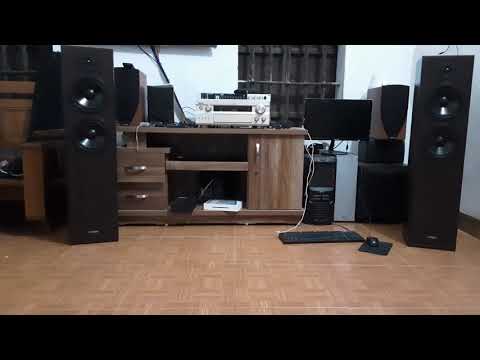 yamaha ns-f51 testnam nguyen


